




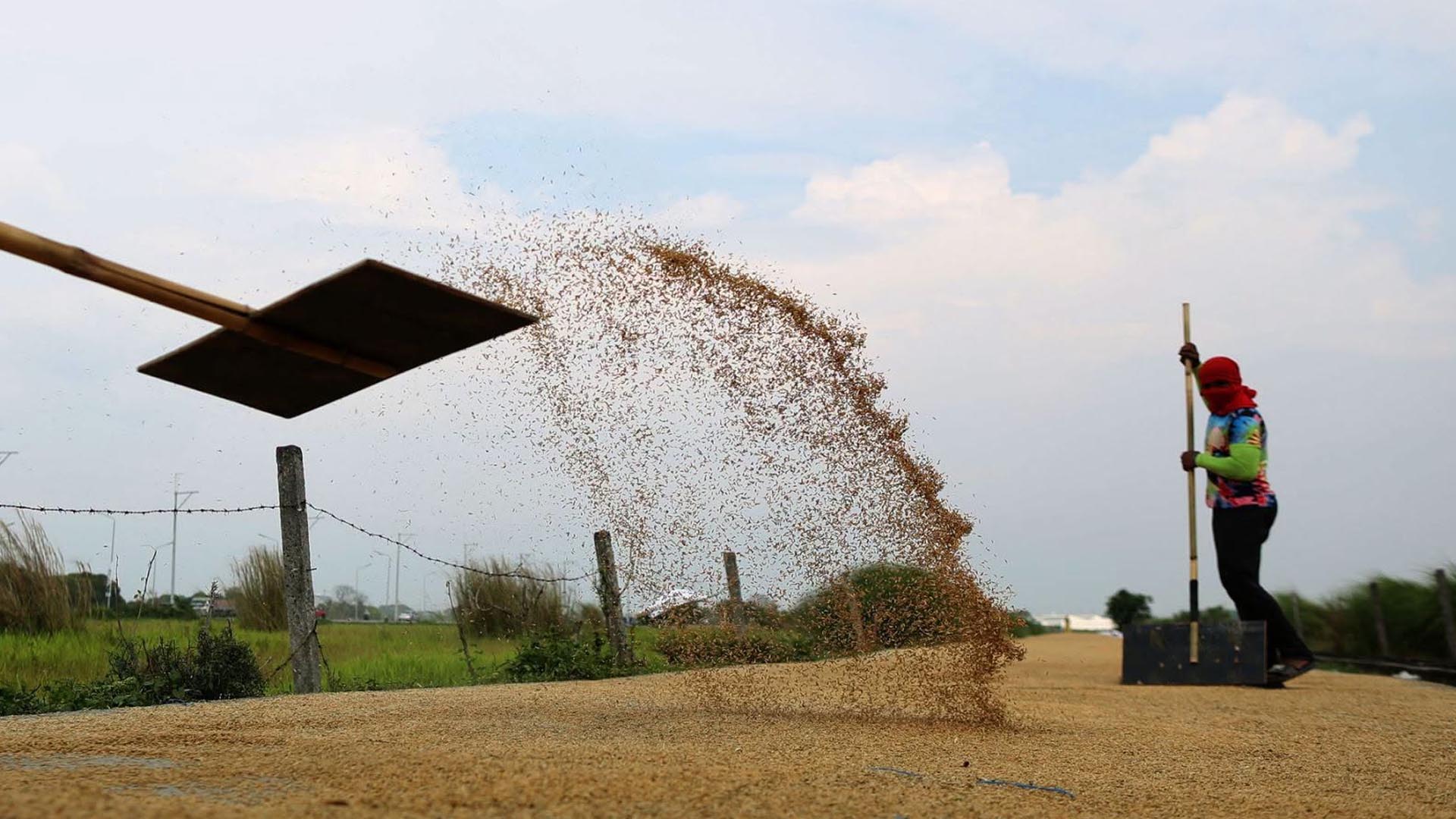







The Department of Agriculture (DA) on Friday assured that it has measures in place to cushion the impact of extreme weather, following a 5 percent decline in agriculture and fisheries production in the third quarter.
Both “rising input costs and unfavorable weather situations” are seen as factors behind the overall output drop, valued at PHP389.42 billion in July to September, according to the Philippine Statistics Authority (PSA) report.
In a statement, DA Secretary Francisco Tiu Laurel Jr. said the administration has already prepared funds and intervention to ensure recovery from the looming effect of very strong El Niño.
“We have mapped out a PHP62-billion El Niño response plan that will leverage new technologies, innovations, targeted interventions, and collaboration with various government agencies to mitigate the impact of the climate risk on agriculture,” he said.
For his part, DA Undersecretary and Rice Industry Development Program overseer Christopher Morales underscored the need to allocate investments in water management infrastructure.
“Water management infrastructure will not only help us cope with droughts but also allow us to store excess water during La Niña episodes,” he said.
These include water impounding dams and solar-powered irrigation systems.
Tiu Laurel, meanwhile, said that subsectors which performed stronger during the third quarter, particularly livestock and poultry, offer a “foundation for recovery” as the country braces for the peak impact of a very strong El Niño.
According to the PSA, the livestock and poultry sectors accounted for almost 37 percent of the overall agrifishery output, which countered weakened crop and fishery production.
Poultry was the strongest performer, which expanded 4.9 percent and valued at PHP79.67 billion; while livestock production rose by 1.1 percent, valued at PHP61.17 billion.
To sustain these gains, the agency said it is important to ensure that interventions will help support domestic food supply, protect farmers’ income, and keep staple food at affordable prices despite weather disruptions.
“And the DA will not do this alone. This El Niño plan will be carried through a whole-of-government approach,” Tiu Laurel said.
Crops, which include corn and palay (unhusked rice), meanwhile, accounted for 51 percent of total agricultural and fisheries production.
Palay and corn output both plunged by 18 percent and 17 percent, respectively.
Rice production dropped to 3.08 million metric tons (MT), while corn output declined to 2 million MT, with adjustments on cropping intentions due to spiking fertilizer prices and high input costs, alongside the effect of flooding following the effects of the southwest monsoon. (PNA)