




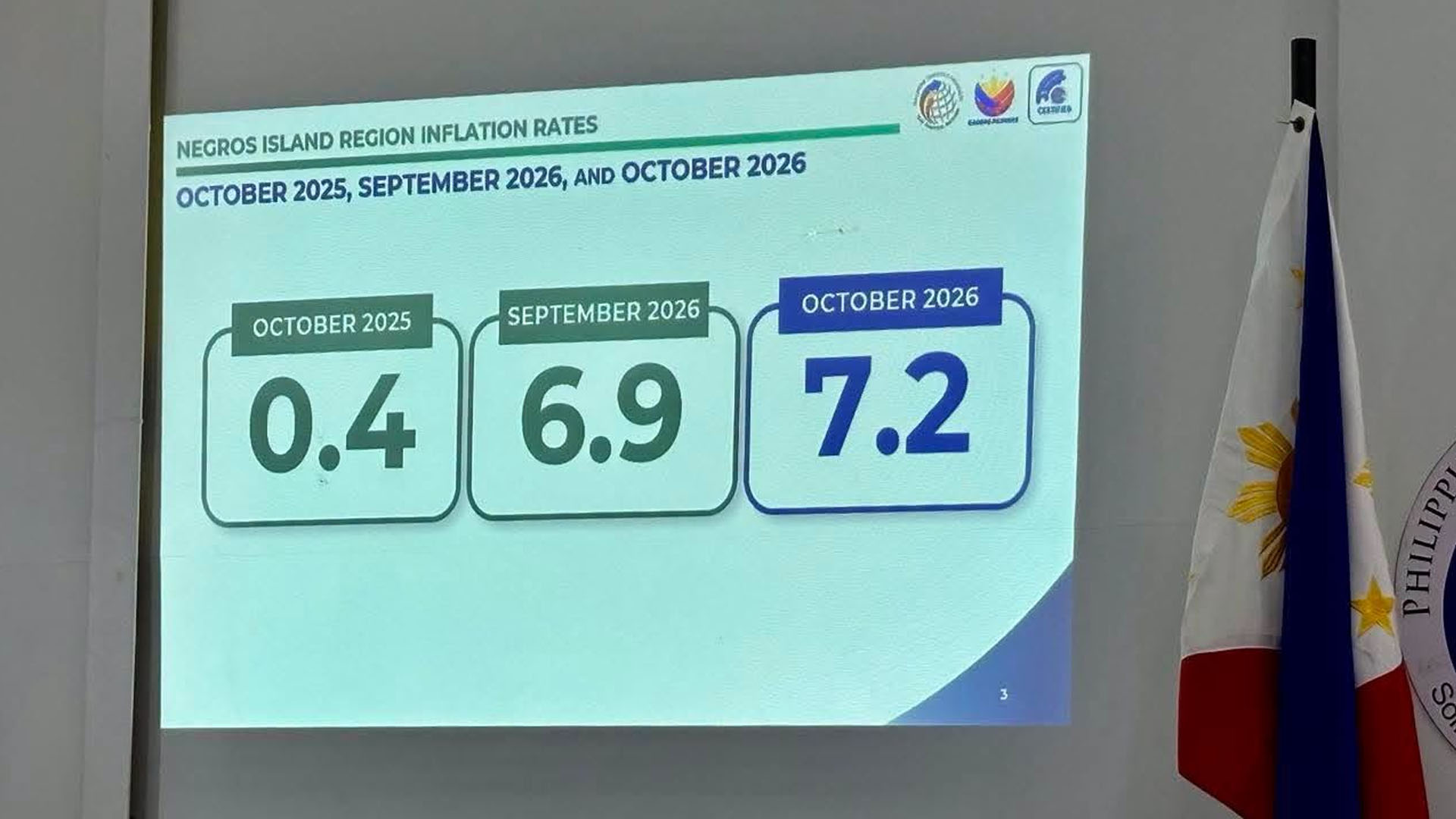







Inflation in the Negros Island Region (NIR) accelerated to 7.2 percent in October 2026, up from 6.9 percent in September and significantly higher than the 0.4 percent recorded in the same month last year.
Ma. Goretti Novilla, chief statistical specialist and regional chief of the Statistical Operations and Coordination Division of the Philippine Statistics Authority in the Negros Island Region (PSA-NIR), disclosed the figures during a press conference here on Thursday.
Despite the increase, Novilla said the region continued to post one of the country’s lowest inflation rates.
“Despite the increase, the NIR remained among the regions in the country having the lowest inflation rate for October,” Novilla said.
She noted that the region slipped to fourth place among areas with the lowest inflation rates, from fifth place in September.
The region’s average inflation rate from January to October 2026 stood at 4.4 percent.
Transport was the biggest contributor to the October inflation, posting a 15.1 percent rate and accounting for 66.1 percent of the region’s overall inflation.
The increase in transport costs was driven largely by gasoline, which registered 45.5 percent inflation, and other passenger transport by road at 4.5 percent, particularly tricycle fares.
Food and non-alcoholic beverages ranked second among the major contributors, with a 6.3 percent inflation rate and a 25.8 percent share of overall inflation.
Within this category, cereals and cereal products recorded the highest inflation at 11.3 percent, particularly rice and corn.
Information and communication was the third major source of inflationary pressure, posting a 3.2 percent rate and accounting for 5.9 percent of the overall increase.
Another commodity group contributing to the October inflation was housing, water, electricity, gas and other fuels, which recorded 6.3 percent inflation.
The five commodities and services identified as the leading contributors were rice, gasoline, restaurants, cafes and similar establishments, rentals, and electricity from all sources.
Food inflation likewise increased to 6.5 percent in October from 6.3 percent in September.
The food groups which recorded higher inflation during the month were rice; flour, bread and other bakery products; fruits and nuts; vegetables, tubers and other related products; ready-made food and other food products; and sugar, confectionery and desserts.
Meanwhile, lower inflation rates were recorded for corn; fish and other seafood; milk, other dairy products and eggs; and oils and fats. Meat and other meat products maintained their previous inflation rate.
Among the NIR provinces and a highly urbanized city, Siquijor posted the highest inflation at 9.0 percent, followed by Bacolod City at 8.7 percent, Negros Oriental at 6.9 percent, and Negros Occidental at 6.7 percent.
For households belonging to the bottom 30 percent income group, inflation also increased to 7.8 percent in October from 7.5 percent in September. Their average inflation rate from January to October stood at 4.1 percent.
The main contributors to inflation among these households were food and non-alcoholic beverages; transport; and housing, water, electricity, gas and other fuels.
Novilla said inflation could increase further during the Christmas season as employment opportunities expand and consumer spending picks up, particularly with holiday shopping. (PNA)