




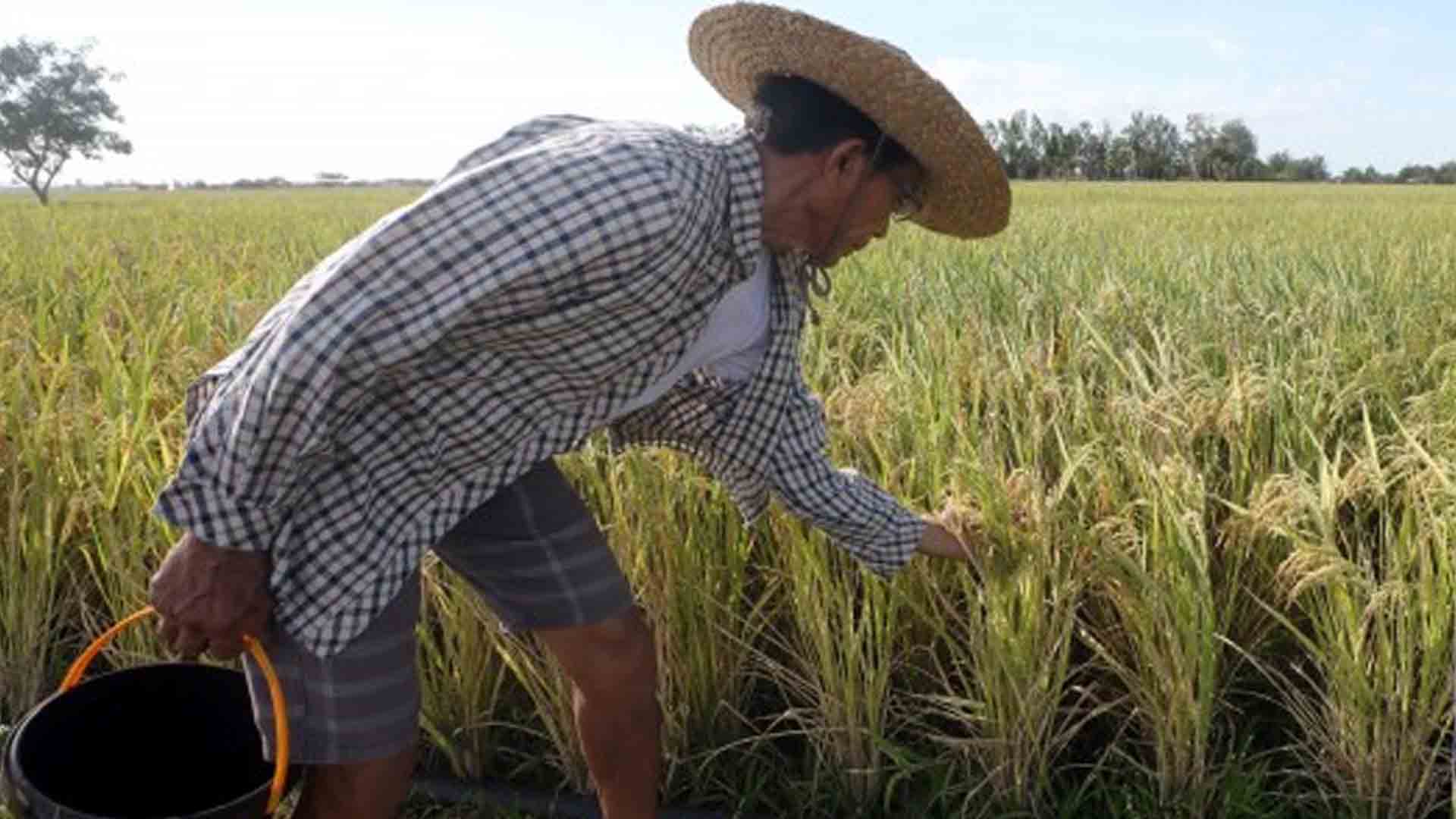







An agricultural economist in the academe on Tuesday said the agriculture sector’s contribution to the gross domestic product (GDP) naturally declines as a country moves closer to developed economy status.
This came as a reaction to a Philippine Statistics Authority study showing that the agriculture, forestry and fishing (AFF) sector accounted for only 8.9 percent of GDP in 2022, the lowest in five years.
In an interview, Roberto Galang, dean at the Ateneo de Manila’s John Gokongwei School of Management, explained that the diminishing share of agriculture in the Philippine economy is expected as most countries go through this shift as they develop.
“Higher productivity sectors, like manufacturing, Business Process Outsourcing-services and tourism are expected to be the main drivers of the economy going forward,” he added.
The dean cited neighboring Thailand, whose agriculture sector only contributed some 8.5 percent to its GDP during the same period.
However, Galang said the Philippines’ AFF sector still leaves much room for improvement.
He emphasized that there is an urgent need to raise agricultural productivity to alleviate poverty and ensure food security in view of recent shortages in certain staple commodities.
“A lot of interventions can help, including the clarification of rules around ownership and consolidation of agricultural lands, greater investments in agricultural technologies like high-value seeds, greenhouses, better access to finance for smallholder farms, and improved logistics,” Galang said.
Meanwhile, hybrid rice proponent Henry Lim Bon Liong said a sure way to increase agricultural productivity is to abandon traditional rice varieties in favor of much more prolific ones.
He noted that traditional rice can only produce 3 to 4 tons per hectare while hybrid rice can produce 8 to 10 tons per hectare, and in some cases, even an excess of this.
“If three million hectares of the country’s 4.6 million hectares of rice land can be planted with hybrid (rice), we will never have to import again,” he added.
Bon Liong, chair of SL Agritech, a private company engaged in the research, development, production and distribution of hybrid rice seed, lauded the incumbent administration for reviving the Masagana Rice Industry Development Program, which attempts to modernize the rice sector with the aim of achieving self-sufficiency.
In the PSA’s report, it was noted that the AFF’s contribution to GDP was 9.7 percent in 2018; 9.2 percent in 2019; 10.2 percent in 2020; and 9.6 percent in 2021. (PNA)