




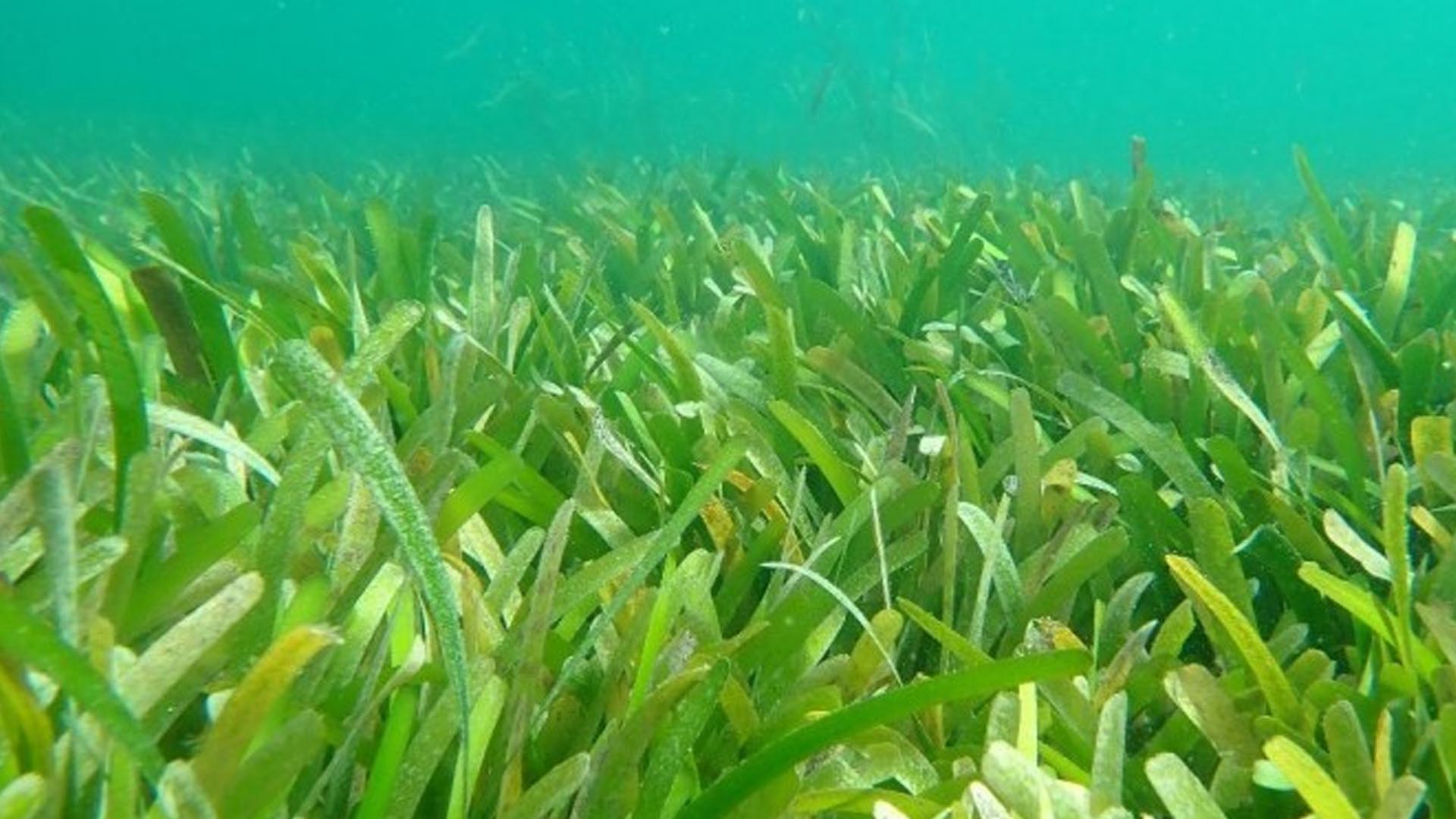







The Department of Environment and Natural Resources (DENR) is working on an initiative focusing on the conservation and management of seagrass in Pilar, Capiz.
Project “Lusay” emphasizes long-term conservation, scientific monitoring, and stakeholder collaboration that ensures measurable and lasting environmental and social benefits, the DENR said in a statement on Friday.
About 159 hectares of seagrass, locally called lusay, along with seaweed and algae beds were identified in the municipality during the 2021 Coastal and Marine Ecosystems Management Program (CMEMP) conducted by the Provincial Environment and Natural Resources Office (PENRO) in Capiz.
The areas surveyed included Barangay Balogo with 81.30 hectares, Barangay Casanayan with 35.65 hectares, Barangay San Ramon with 30.85 hectares, and Barangay San Antonio with 11.20 hectares.
“Project Lusay will identify and assess the potential of the place as a protected area based on the ecological significance and determine its appropriate category through the Protected Area Suitability Assessment (PASA),” the statement said.
Ernest Federiso, PENRO chief, also intends to partner with the provincial government of Capiz, local government units of Pilar, the Bureau of Fisheries and Aquatic Resources (BFAR), coastal communities, fisherfolk organizations, and academic institutions to leverage resources, share knowledge, and promote collective responsibility for the conservation of the seagrass beds.
The public is also encouraged to engage in coastal or underwater dive clean-ups, especially because “the carbon sequestration rate of seagrass is higher than that of mangroves and trees.”
Seagrass is essential to marine ecosystems, providing critical habitats for various marine species, enhancing water quality, and preventing coastal erosion.
Like forests on land, seagrass is highly effective at storing carbon and producing oxygen-rich waters.
According to the environment office, a single square meter of seagrass can produce up to 10 liters of oxygen through photosynthesis, which is why it is called the “lungs of the sea.”
DENR 6 (Western Visayas) Executive Director Raul Lorilla said the ongoing efforts in Pilar could serve as a model for marine conservation.
“By prioritizing the health of these seagrass beds, the community can help secure a sustainable future for both marine life and local livelihoods,” he said. (PNA)