




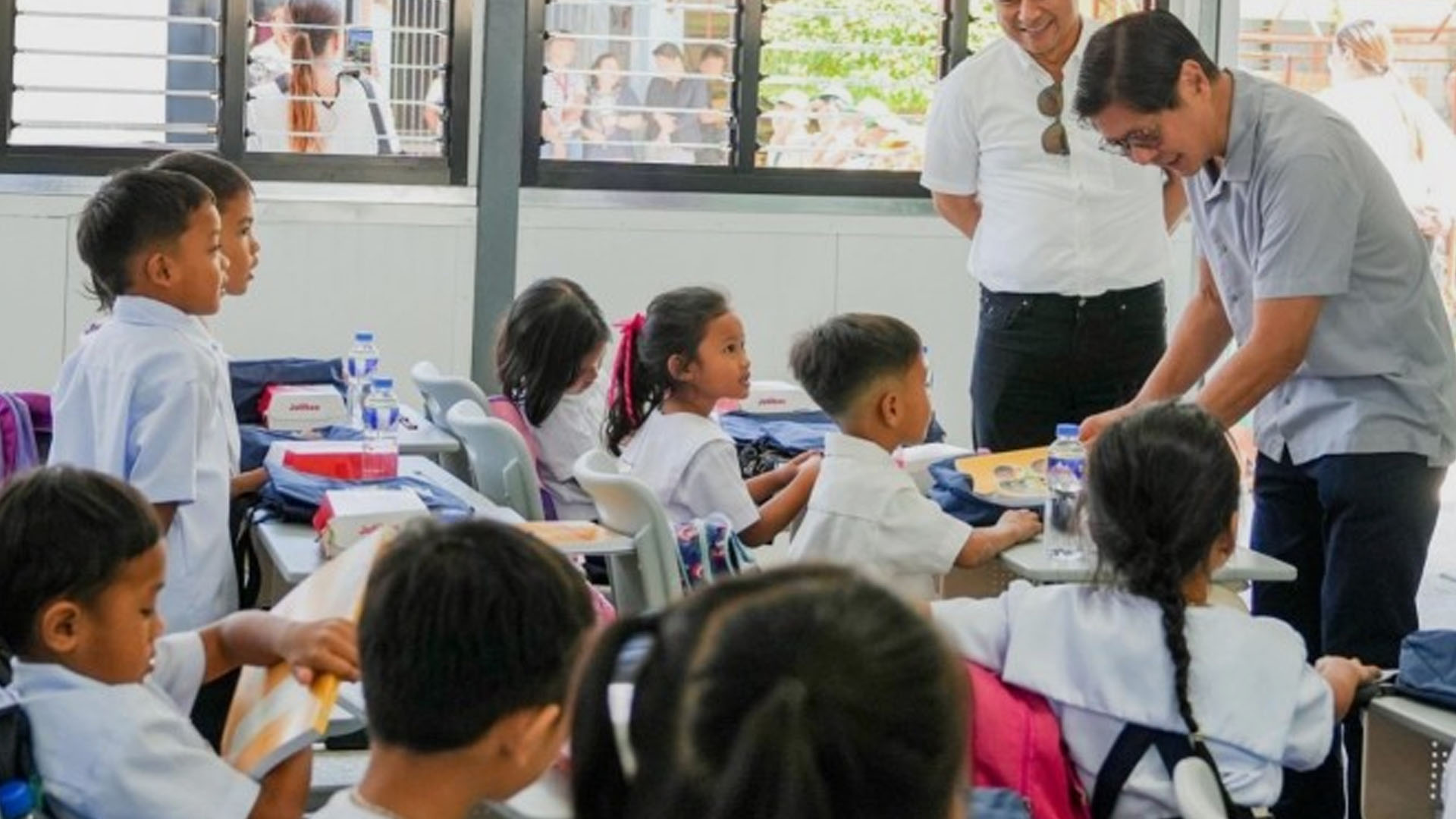







President Ferdinand R. Marcos Jr. on Monday led the turnover and inspection of the Learning Continuity Space (LCS) and the rollout of the Philippine Health Insurance Corporation’s (PhilHealth) Yaman ng Kalusugan (YAKAP) Program at Kalinga Caravan in Bogo City, Cebu, as part of the government’s efforts to support communities affected by the September 2025 earthquake.
The initiatives aim to help ensure the continuity of education while providing primary healthcare services to students, teachers, and residents in areas impacted by the disaster.
During the visit, Marcos, together with Education Secretary Sonny Angara, inspected the newly established LCS, a durable modular classroom equipped with solar power and internet connectivity, designed to ensure uninterrupted learning while damaged school facilities are repaired or rebuilt.
The facility is part of the government’s nationwide plan to build 1,134 LCS units, benefiting more than 51,000 students across the country.
An LCS facility was also constructed at the Binabag Elementary School in Barangay Binabag, Bogo City.
LCS facilities also provided critical relief to Calolod Elementary School and Electo T. Verano Elementary School in the province. Additional LCS units were deployed to B. Titong High School, Asid Integrated School, and Luy-A Elementary School to restore learning environments.
Alongside the education support, the government also launched the YAKAP at Kalinga Caravan, which delivered free laboratory tests, diagnostic exams, medical consultations, medicines, and reading glasses for teachers and students.
Under YAKAP, beneficiaries may receive up to PHP20,000 worth of free medicines per year, expanding access to healthcare services in communities.
The Office of the President also provided additional support during the event, including a Starlink internet kit, 181 school bags for Kinder and Grade 1 pupils, and 800 packed meals for participants.
The activity forms part of the national government’s post-disaster recovery efforts in northern Cebu, which was among the areas hit by the earthquake last year.
Angara said these climate-resilient structures, which can be installed within two weeks, represent the administration’s proactive stance on school safety and recovery.
“This project reflects the marching orders of President Marcos to ensure that no Filipino learner is left behind, even in the face of the most challenging calamities,” said Angara. “By integrating solar power and digital tools into these temporary spaces, we are not just rebuilding classrooms, but building a more resilient future for our children.” (PNA)