




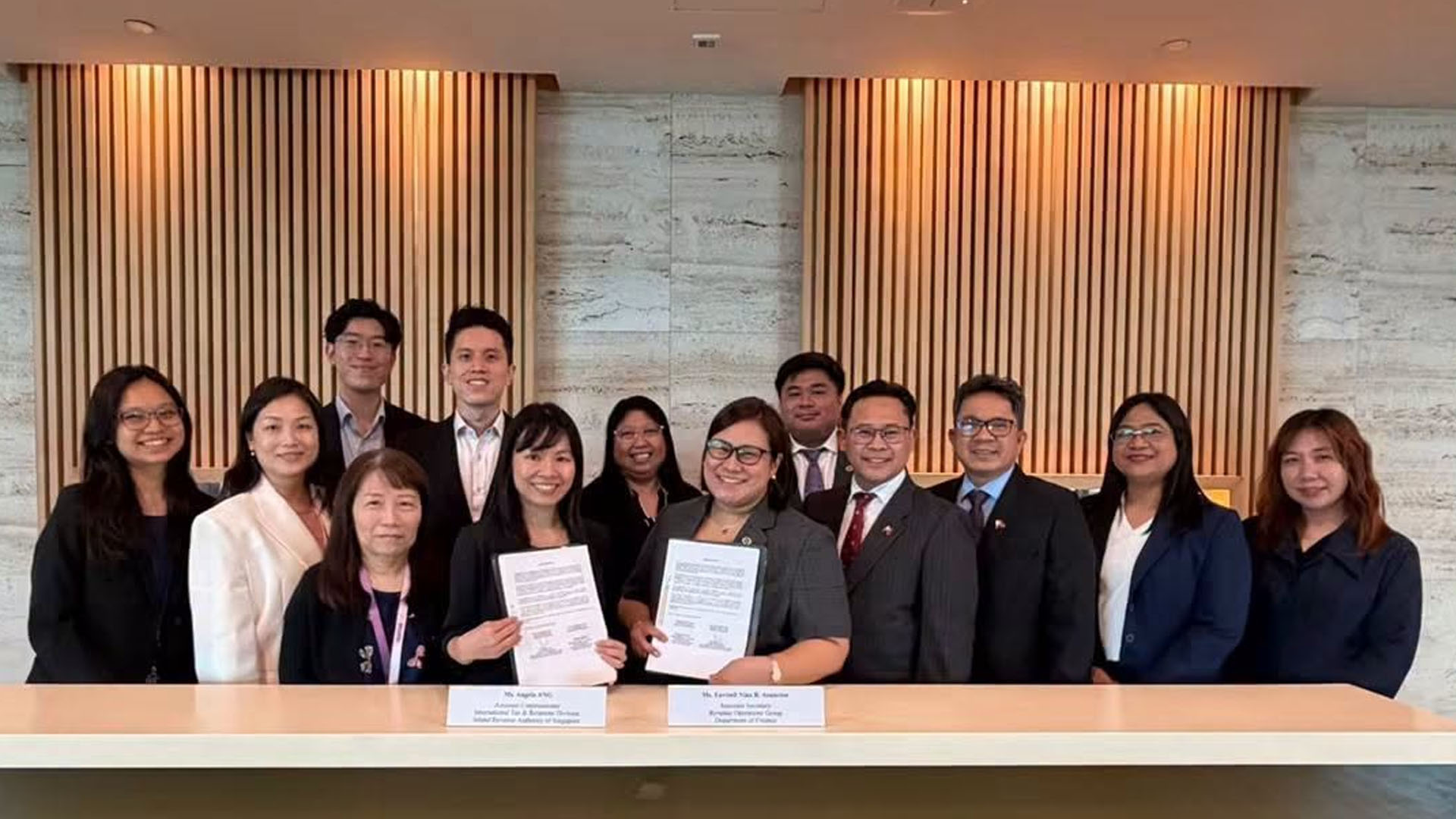







The newly updated Philippines-Singapore tax treaty will modernize cross-border economic tax frameworks, provide clearer and more predictable tax rules and ensure fair taxation while strengthening cooperation between tax authorities, according to the Department of Finance (DOF).
The DOF announced Friday that negotiations were successfully concluded during a four-day session held in Singapore from Sept. 22 to 25, 2026.
“The Philippines is committed to strengthening tax cooperation across the region. The renegotiation of the DTA will help modernize our tax framework to support investment and economic growth while protecting our legitimate taxing rights,” Finance Secretary Frederick Go said.
The renegotiation seeks to update the Double Taxation Agreement (DTA), originally concluded in 1977, to reflect developments in the economies and international tax landscape of both countries.
It is part of the government’s efforts to strengthen and modernize the country’s network of tax treaties with Association of Southeast Asian Nations (ASEAN) member states and ensure that these agreements remain responsive to current economic realities and developments in international taxation.
The Philippines negotiating team was led by DOF Revenue Operations Group Assistant Secretary Euvimil Nina Asuncion, with Assistant Secretary Dakila Elteen Napao, Bureau of Internal Revenue Deputy Commissioner Larry Barcelo of the Legal Group, and lawyer Robbie Bañaga of the International Tax Affairs Division as members of the delegation.
The Singapore team was led by International Tax and Relations Division-Inland Revenue Authority of Singapore Assistant Commissioner Angela Ang, with ITaRD Tax Director Gordon Cheong, ITaRD Group Tax Specialist Wee Ling Chew, and ITaRD Senior Tax Specialist Rebecca Ng.
PH-Cambodia DTA
Meanwhile, the DOF also welcomed the Senate’s concurrence in the Philippines-Cambodia DTA, which was signed in February 2025.
The DOF said the Senate’s concurrence brings the Philippines-Cambodia DTA closer to its entry into force.
Once in force, the agreement will set clear tax rules between the two countries, prevent double taxation and strengthen cooperation against tax evasion and avoidance.
It will also provide a clearer and more predictable tax framework to support bilateral trade and investment and advance the Philippines’ efforts to deepen tax cooperation within ASEAN. (PNA)