




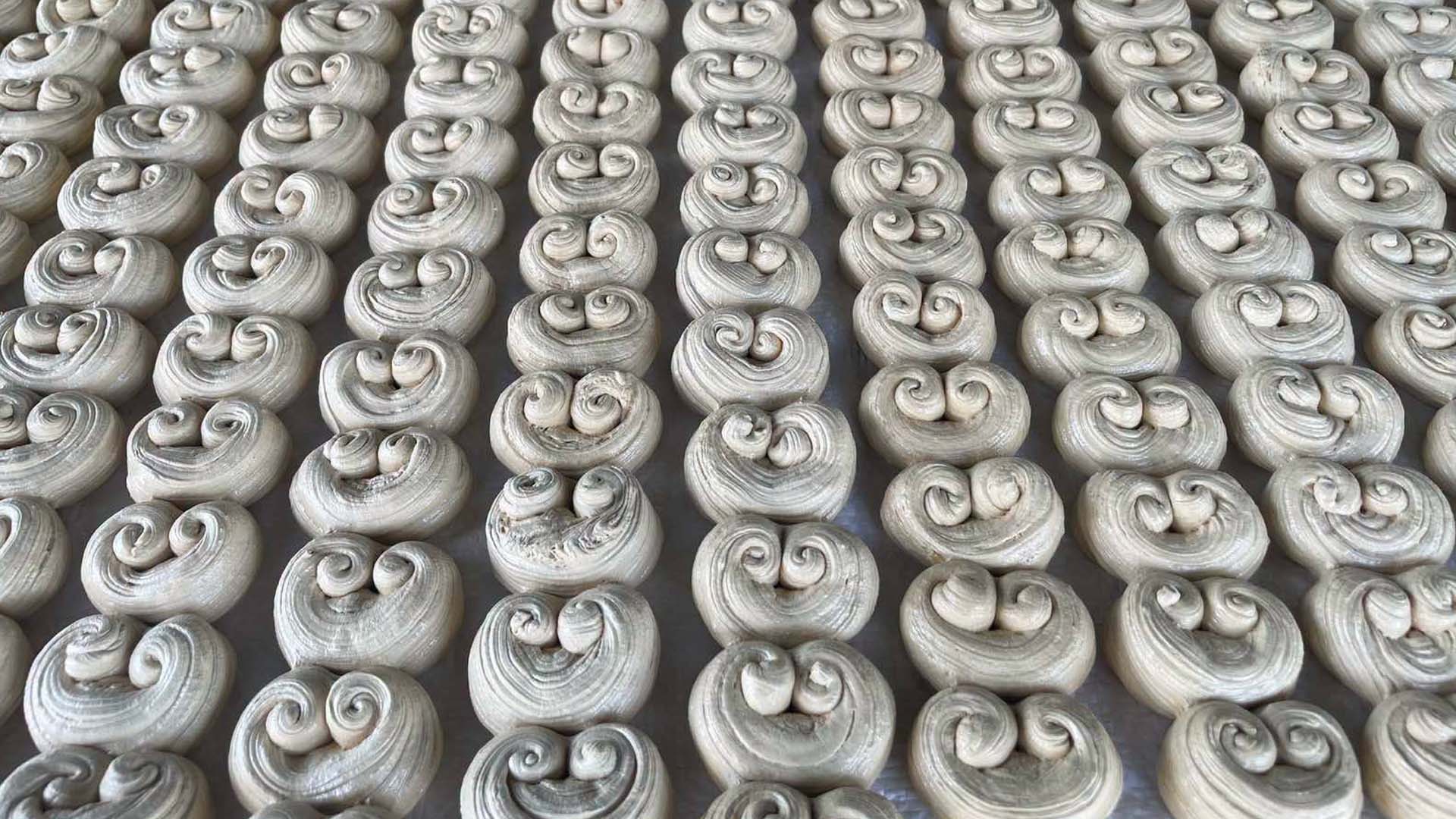







The traditional balicucha industry here continues to sweeten livelihoods in a rural village of Maynganay Norte, as local producers preserve a cherished Ilocano hand-pulled candy while creating economic opportunities through community-based food production.
Made from sugarcane juice, balicucha is a native Ilocano sweet that brings back memories of childhood for Ilocos residents whose grandparents, parents, uncles and aunts have sugarcane pocket plantations back in the day.
Rosemelyn Calip, owner of Elirose Balicucha Sugarcane Products in Maynganay Norte told visitors during a creative tour organized by the Department of Tourism (DOT) and Department of Trade and Industry (DTI) on Tuesday said the continued production requires patience and skill from planting to extracting and cooking the sugarcane juice to achieve the desired consistency and texture. The villagers experience highlights how traditional food-making skills can be transformed into a source of livelihood while keeping cultural practices alive.
Calip said continuing the practice means preserving a culinary tradition passed down through generations.
The delicacy also represents the resourcefulness of rural communities that make use of agricultural products to create food items deeply rooted in local culture.
“Thank you for visiting our village, the balicucha country,” she said as visitors, particularly students on immersion activities, take turns in going to the village to witness the process of “panagdapil”, a traditional Ilocano community practice of extracting juice from harvested sugarcane stalks using a wooden or stone press called “dadapilan”.
While some farmers in Ilocos Region still use a carabao to pull the extracting machine clockwise while sugarcane is inserted to its presser to get the juice, Maynganay villagers are now using farm machinery to do the job.
Behind the industry’s continued success is the dedication of local producers who share a common goal of sustaining their livelihood and protecting their community’s heritage.
Community-based production allows residents to contribute their skills and labor while generating income from a product associated with Ilocano identity.
Their efforts demonstrate how cooperation and a shared appreciation for local traditions can help sustain small-scale enterprises in rural communities.
On the part of the DOT and DTI in Region 1, both agencies have strengthened collaboration to promote experienced-based tourism while sustaining livelihood of rural communities.
As interest in locally made products grows, balicucha producers have opportunities to reach more consumers through local markets, trade fairs and tourism-related activities.
The DTI continuously provides trainings on improved packaging, product development and marketing to further strengthen the industry’s competitiveness while preserving the authenticity of the traditional delicacy.
With appropriate support for food safety and enterprise development, the industry thrives to provide livelihood opportunities and promote the culinary heritage of Ilocos Sur.
In Maynganay Norte, balicucha remains more than a sweet treat. It is a symbol of cultural pride, community cooperation and the enduring spirit of rural entrepreneurship.
“Sweet treats like cascaron, hand-pulled balicucha, muscovado sugar, and sinambong are perfect for coffee. Simple treats but rich in flavor, culture, and tradition that keep us proud Ilocanos,” said Richard Hortizuela, one of the creative tour participants who hails from Santa Maria town. (PNA)