




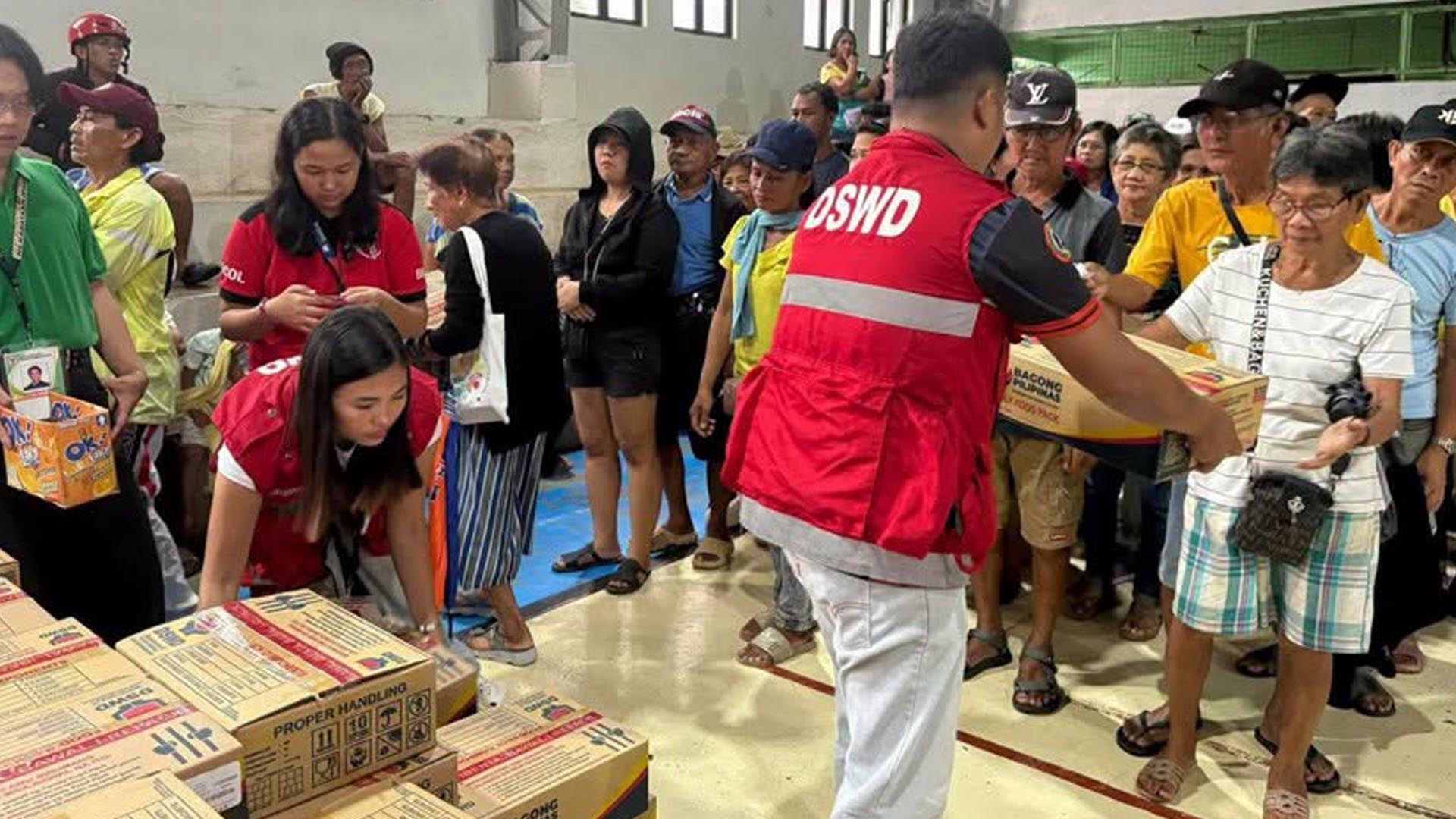







The Department of Social Welfare and Development (DSWD) Bicol has distributed 7,753 family food packs (FFPs) to farmers and families affected by the prolonged dry spell caused by El Niño in parts of the region.
In a report on Wednesday, DSWD-Bicol Director Norman Laurio said the initiative is in line with the directives of President Ferdinand R. Marcos Jr. to ensure that government assistance reaches vulnerable communities and strengthens their resilience to climate change.
The food assistance reached beneficiaries in Sta. Magdalena, Sorsogon; Talisay and San Lorenzo Ruiz in Camarines Norte; and Cawayan, Masbate.
DSWD-Bicol distributed 222 FFPs to farmers in Sta. Magdalena, while 762 packs were given to beneficiaries in Talisay and 469 more to those in San Lorenzo Ruiz, Camarines Norte.
Meanwhile, the agency distributed 6,300 FFPs to affected families in various barangays in Cawayan, Masbate, in coordination with the local government and the municipal agriculture office, which helped identify households most affected by the dry spell.
“The assistance aims to address the immediate food needs of farming families whose livelihoods and incomes have been affected by the prolonged drought,” he said in a statement.
Many residents in the affected communities rely on agriculture and other natural resources for their livelihoods, making them vulnerable to prolonged periods without rainfall.
The food distribution forms part of the agency’s continuing efforts to assist communities affected by El Niño and other climate-related challenges.
DSWD-Bicol is also implementing Project LAWA (Local Adaptation to Water Access) and Project BINHI (Building and Nurturing Inclusive and Healthy Communities) to help communities address water security, food production and livelihood concerns. (PNA)