




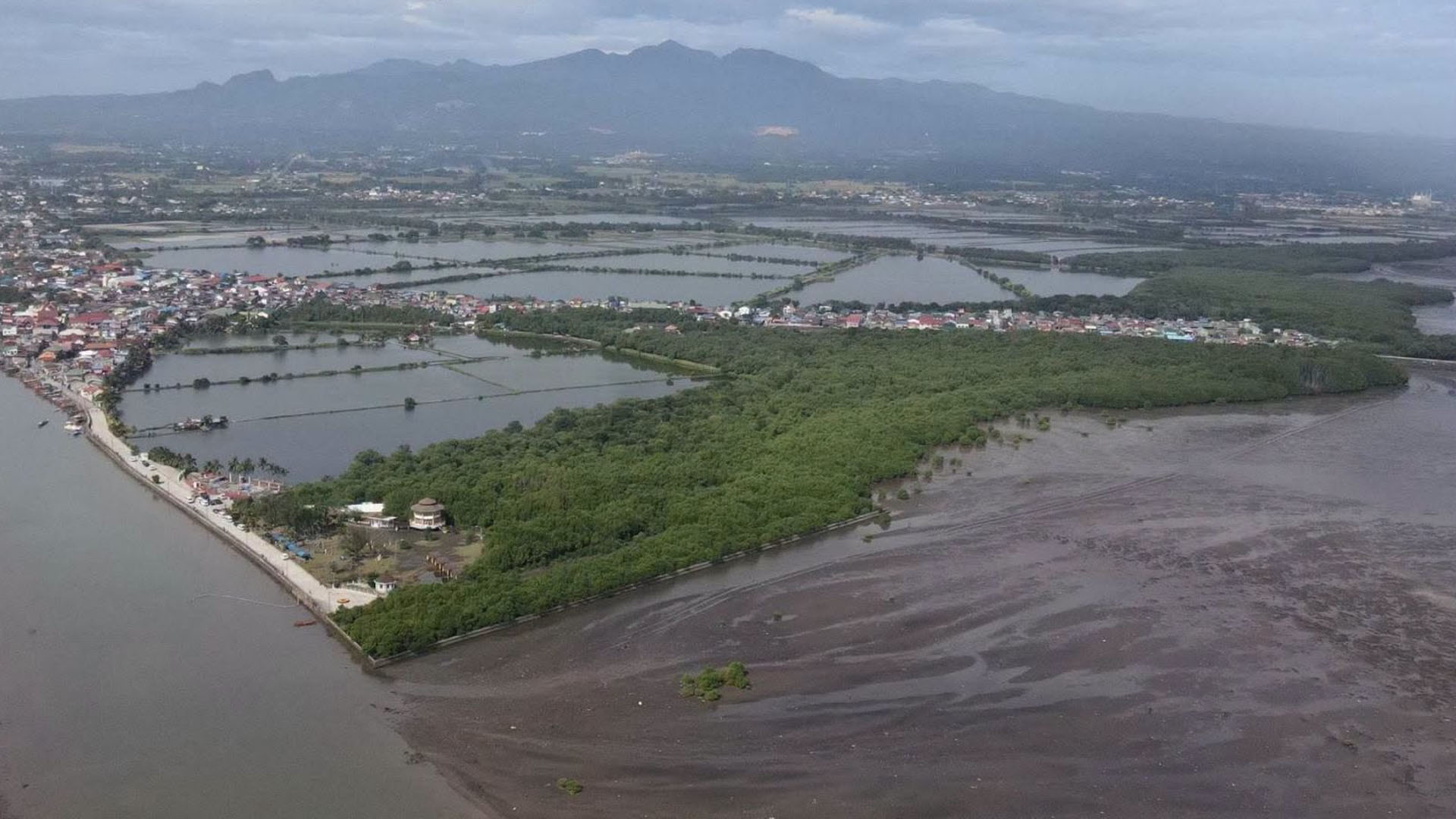







Fish harvests have doubled while nearby communities are now flood-free and protected from strong waves and storm surges following the restoration of mangrove forests along Balanga City’s coastlines.
The Department of Environment and Natural Resources (DENR) said in a news release that for years, communities and fishing families in this coastal Bataan town were regularly threatened by floodwaters, especially during high tide.
Residents said fish catch declined as mangroves were cut down and forests degraded, resulting in the loss of coastal vegetation.
“Noon, maraming nangangahoy at pumuputol ng mga bakhawan sa aming lugar. Kaya tuwing high tide, nagiging problema ito, lalo na kapag sinasabayan pa ng malakas na hangin dahil mas tumataas ang tubig (Before, many people were cutting down mangroves in our area. So, during high tide, this becomes a problem, especially when accompanied by strong winds because the water level rises even more),” Jaime Buenaventura, chair of the City Fishery and Aquatic Resources Management Council, said.
“Sobrang kinakabahan po ako tuwing ganito ang nangyayari, at kapos din po kami sa nahuhuling isda (I get really nervous whenever this happens, and we are also struggling with a shortage of fish catch),” he added.
Now, residents are protected as the restored mangroves serve as natural buffers that reduce wave impact and slow floodwaters before they reach homes and fishponds.
Its roots also provide breeding and nursery grounds for fish and other marine species, helping replenish local fishing grounds.
Fisher Benjie Manuel noted that the mangroves helped shield the area from strong waves during recent typhoons.
He also reported that their income have more than doubled as yields improved.
Meanwhile, the restored area has attracted visitors, creating opportunities for tourism and other local enterprises.
The DENR has supported the conservation and restoration of Balanga’s mangrove ecosystem through technical assistance, capacity-building activities and regular monitoring.
The agency also deploys river rangers to maintain waterways and protect coastal resources.
Trash traps and waste interception systems have been installed to prevent floating garbage from reaching mangrove forests and estuarine areas.
Local fishers and volunteers contribute by planting and nurturing mangroves along the coastline.
Manuel said the community’s efforts have provided protection for both their livelihoods and their homes.
“Laking pasasalamat namin na nakapagtanim kami ng bakhawan na naging depensa na sa palaisdaan, depensa pa sa mamamayan (We are very grateful that we were able to plant mangroves, which have become a defense for the fishponds and the community),” he said.
During a recent inspection of the Balanga Wetland and Nature Park, Environment Secretary Juan Miguel Cuna highlighted the importance of protecting natural ecosystems as part of the country’s response to climate change.
He said the initiative supports President Ferdinand R. Marcos Jr.’s November 2024 directive for the DENR and other government agencies to revise the country’s flood control master plan to address increasingly intense storms and heavier rainfall.
Cuna said Balanga’s experience shows how mangrove restoration can support local fisheries while providing coastal communities with a natural defense against climate-related hazards. (PNA)