




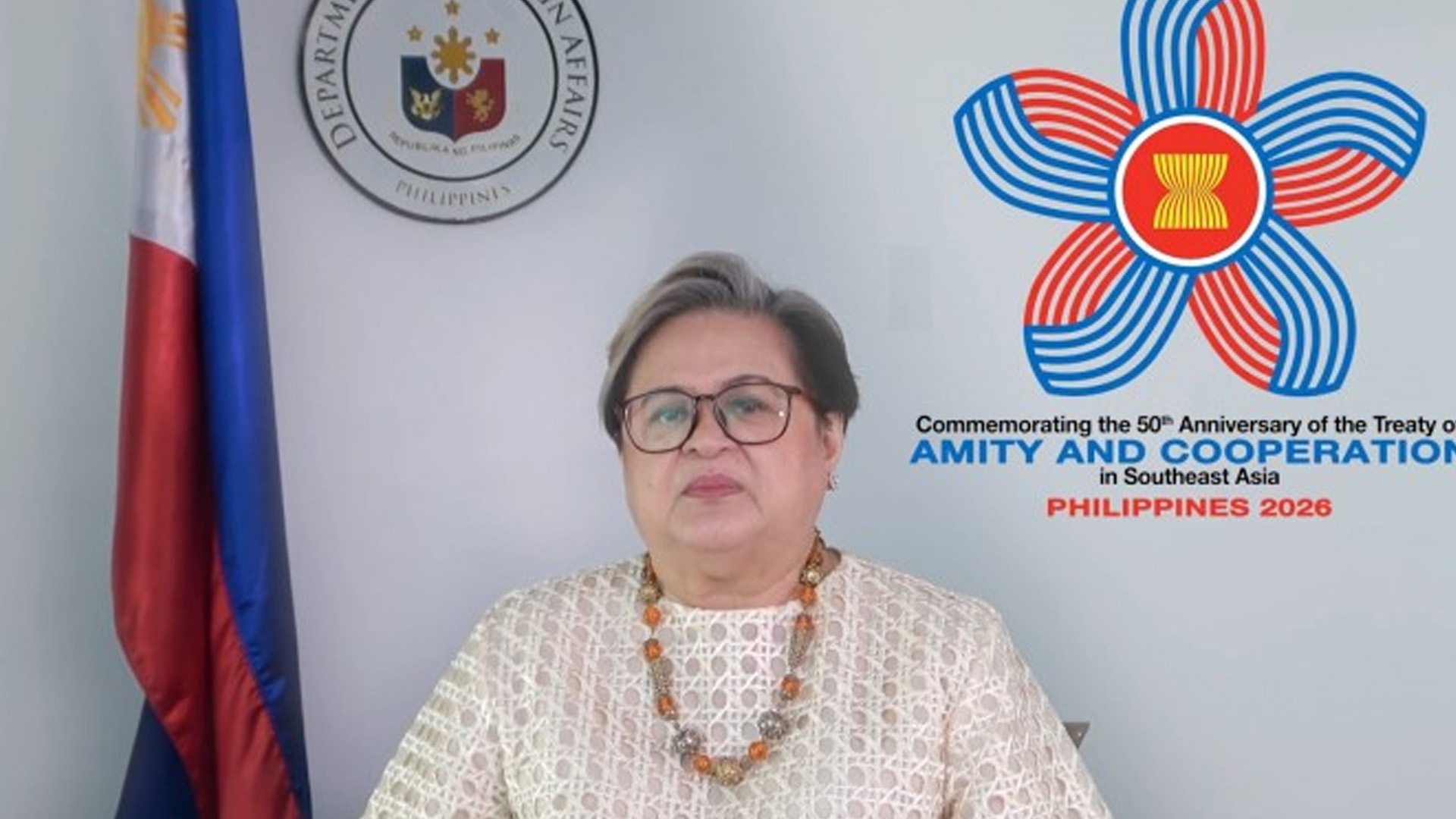







The Association of Southeast Asian Nations (ASEAN) marked the 50th anniversary of the Treaty of Amity and Cooperation (TAC), a landmark agreement among 58 states for peaceful interstate relations in the region.
In a joint statement on Tuesday, the 11 ASEAN foreign ministers called on all TAC parties to reaffirm their commitment to TAC’s purposes and principles, and to “fulfill their obligations under the Treaty in its entirety.”
“We also reiterate the importance of continuing to promote awareness, understanding and adherence to the underlying principles of the TAC among high contracting parties (HCPs),” it said.
The 11 ASEAN foreign ministers, for their part, affirmed the treaty’s enduring relevance to the region, and vowed to continue advancing its five fundamental principles —mutual respect for sovereignty and territorial integrity, non-interference in internal affairs, peaceful settlement of disputes, renunciation of the threat or use of force, and effective cooperation.
They also agreed to bolster the treaty’s visibility in Southeast Asia, in part by strengthening ASEAN’s research activities on peace, reconciliation, conflict management, and conflict resolution.
The treaty was signed on Feb. 24, 1976 by the original five signatories, including the Philippines.
Today, it is binding to a total of 58 high contracting parties, including global powers like the United States, China, Japan, France, Canada, the European Union, India and Russia.
Five decades of commitment
On Tuesday, the Philippines, as the 2026 ASEAN chair, led a historic milestone, with the launch of the TAC commemorative logo, featuring its national flower, the sampaguita (jasmine).
Foreign Affairs Secretary Ma. Theresa Lazaro recalled how the TAC, envisioned as a framework for peaceful coexistence and cooperation, has since “become a cornerstone of regional stability and trust.”
The logo’s five-petaled illustration, Lazaro said, signifies the five continents from which the 58 High Contracting Parties of the TAC to date originate: Asia, the Americas, Africa, Europe and Oceania, “coalescing through ASEAN and affirming the breadth and growing reach of the Treaty.”
“May this commemorative logo continue to sow the seeds of ASEAN community-building and further cultivate regional development, economic growth, and enhanced political, economic, and socio-cultural relations between ASEAN and the HCPs,” she said.
“Just like the Sampaguita, may the TAC continue to blossom, deepen cooperation among nations and inspire the generations to come.”
Aside from the Philippines, the 11 ASEAN member states include Brunei, Cambodia, Indonesia, Laos, Malaysia, Myanmar, Singapore, Thailand, Timor Leste, and Vietnam. (PNA)