




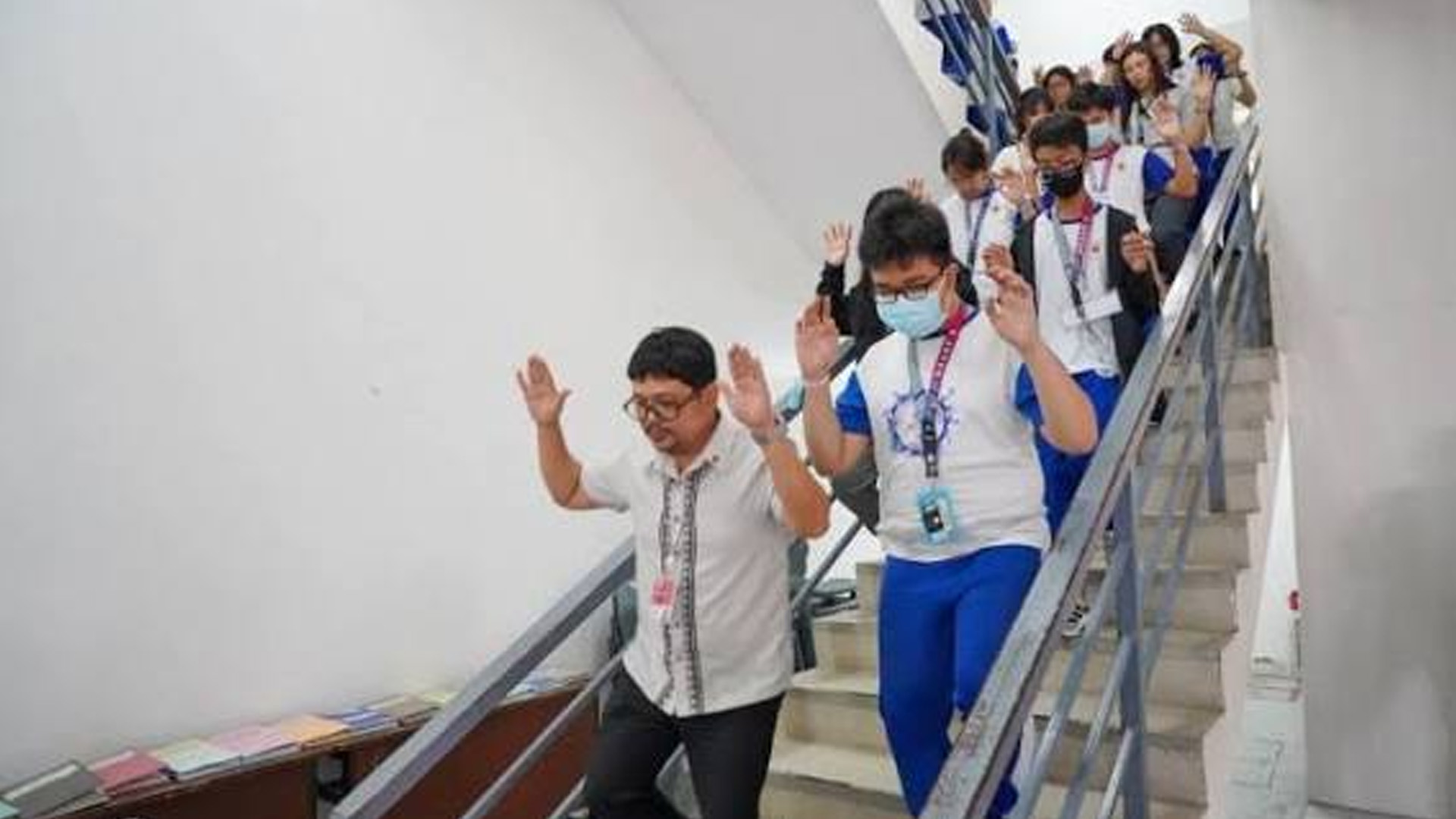







The Department of Education (DepEd) will conduct the National Simultaneous School Safety Drill on Thursday, with the exercise focusing on institutional preparedness for active threat scenarios while ensuring strict safeguards for learners’ psychological and physical well-being.
Education Secretary Sonny Angara said the rescheduled drill was designed to strengthen schools’ emergency preparedness without causing unnecessary fear or distress among students.
“Safety is not just about physical security; it is equally about protecting our children’s peace of mind. We are working closely with our medical experts and psychiatric societies to ensure our shared priority for the total well-being of our children remains at the center of our implementation,” Angara said in a statement.
The drill was rescheduled following consultations with medical and mental health organizations, including the Philippine Psychiatric Association, the Philippine Society for Child and Adolescent Psychiatry, and the Philippine Pediatric Society.
The consultations sought to ensure that safety protocols are aligned with child-centered and trauma-informed standards under DepEd’s “Do No Harm” directive.
“Our goal for September 3 is to build calm operational confidence and muscle memory through proper orientation, not fear. Preparedness saves lives, and trauma-informed execution protects our learners,” Angara said.
Ahead of the drill, participating schools will conduct capacity-building sessions for teachers, readiness assessments and age-appropriate orientations for learners.
School heads and teachers are also required to provide advance notice to learners, parents and school personnel to ensure psychological preparedness and prevent surprise.
Schools must secure informed written parental consent and learner assent before participation. Learners who require accommodations, or whose parents request exemption, must be provided alternative safe activities without penalty or stigmatization.
Students will undergo step-by-step walkthroughs of basic protective actions, including securing entry points, practicing silent concealment away from windows and reviewing evacuation routes. Special arrangements will be made for learners with disabilities and sensory sensitivities.
Under existing disaster risk reduction guidelines, the drill will prohibit hyper-realistic or fear-inducing elements, including threat simulations, active aggressor role-players, bladed or blunt weapons, firearms, pyrotechnics, simulated gunfire and artificial casualties.
A distinct signal, separate from earthquake or fire alarms, will be used to start the exercise.
“Bawat bata ay may kanya-kanyang antas ng katatagan at pang-unawa, kaya hindi pwedeng one-size-fits-all ang ating approach sa kaligtasan (Every child has their own level of resilience and understanding, which is why our approach to safety cannot be one-size-fits-all),” Angara said.
Psychological first aid and post-drill debriefings will be conducted after the exercise. Learners requiring specialized mental health support will be referred through arrangements with schools division offices, local government units and health facilities.
Coordination with the Philippine National Police (PNP) will be limited to external perimeter security, testing emergency dispatch response times and post-incident learner tracking.
PNP personnel will be prohibited from conducting tactical disarming drills involving students or using aggressive uniform displays. (PNA)