




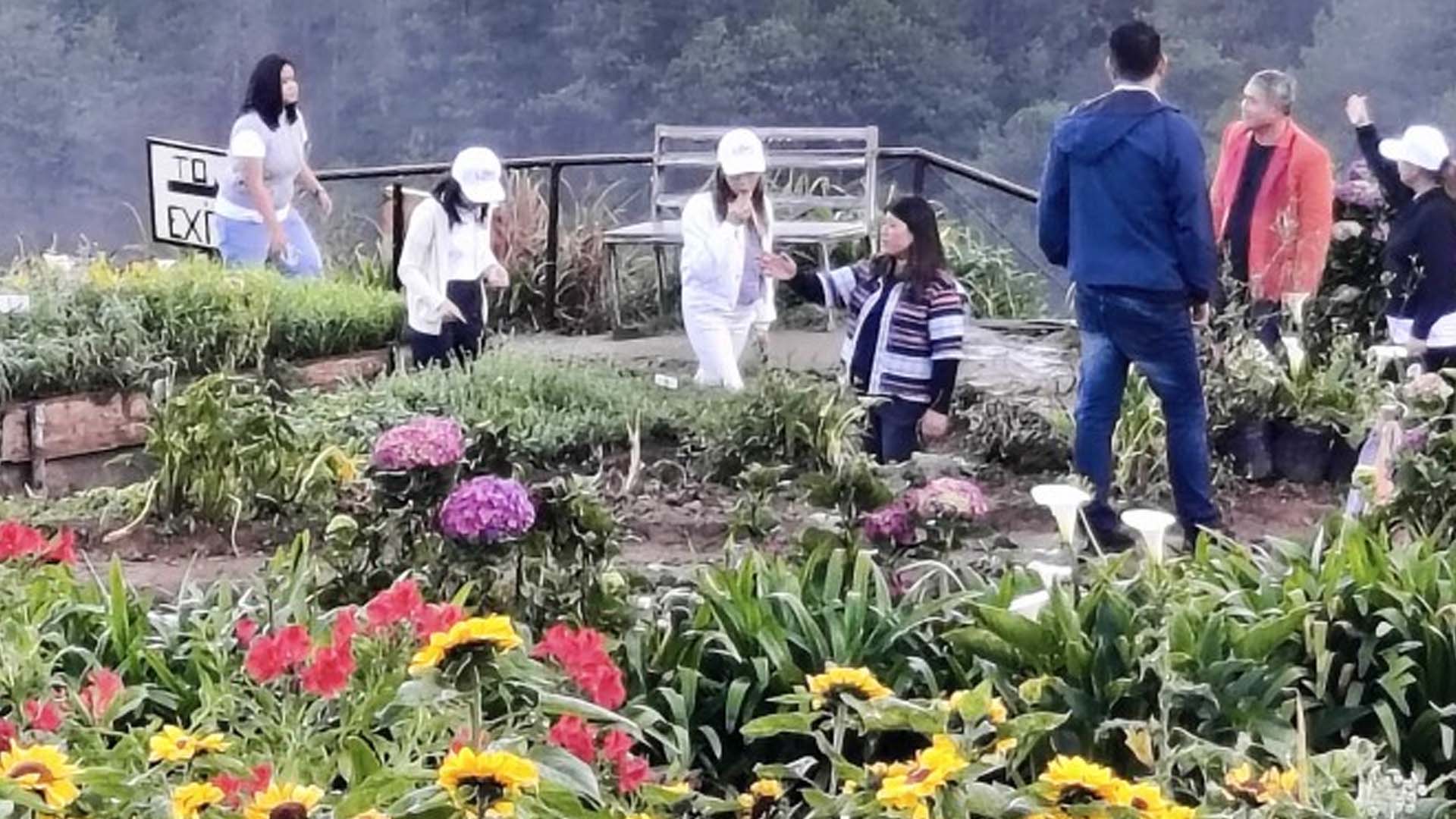







With more people looking to visit farm tourism destinations, the Department of Tourism (DOT) – Cordillera region said agriculture is no longer just about food production and food security, but also about the preservation of culture, health maintenance, and innovation and artistry.
DOT-Cordillera Director Jovi Ganongan, in a recent interview, pointed to the Northern Blossom in Atok, Benguet, which at first was an ordinary agricultural area that later blossomed to become one of the highly sought-after farm tourism destinations.
“It is providing added opportunity to the community and the town through other business and income-generating activities. It has also served as a venue for people to relax and commune with nature, with flowers of different colors and varieties, and learn about the culture of the people through songs, dances, and practices,” Ganongan said.
She recalled that Atok used to be a regular town, but with Northern Blossom opening the door, other government-managed and private-owned tourist attractions have opened to the public, along with inns, homestays, canteens, eateries, and restaurants.
Residents have also ventured into various income-generating activities aside from promoting the town’s culture and heritage to tourists.
Souvenir items ranging from “living gifts” to crafts are also being offered to tourists.
“Wellness tourism is also found in farm tourism destinations, especially those from Metro Manila who look for places to be one with nature and get away from their busy lives,” Ganongan said.
“Many things can be done in a farm, and there is where the innovative character of the owners and operators come out.”
With lots of prospects being offered by farm tourism, the International School for Sustainability in Tourism (ISST) is currently ironing out the offering of the Bachelor of Science in Sustainable Tourism Management in support of the growing interest in opening and investing in farm tourism destinations.
Regular farms are being converted into tourism destinations while continuing to produce food.
“This is one way we can encourage the youth to engage in agriculture, by showing them that farms have added value and income,” Ganongan said.
Former tourism secretary and current president of ISST, Dr. Mina Gabor, said at least 30 percent of tourists in the country look for nature and experience.
In her recent visit to the city for the promotion of the 9th International Farm Tourism Summit, Gabor said the ISST is working with the Commission on Higher Education for college field trips to tourism farms.
“Farm-tourism is getting very popular, especially with the passage of Republic Act 10816, strengthening farm tourism. There is also an assurance that the youth will be enticed to go into agriculture, benefit from the added value, thereby addressing the problem of ageing population of farmers and farm workers,” she said. (PNA)