




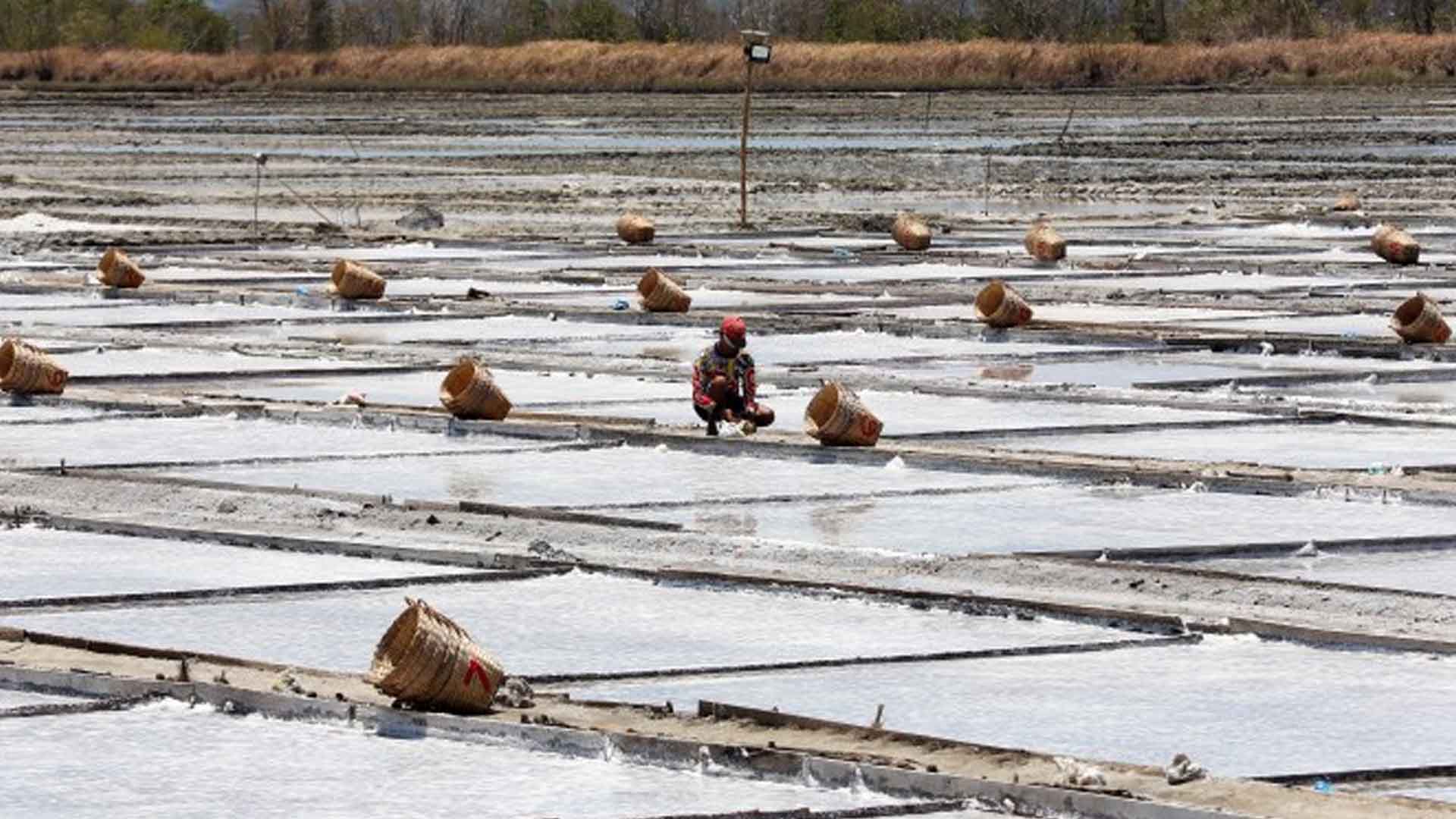







A House panel on Thursday approved a bill exempting locally produced salt from mandatory iodization and giving producers the flexibility of catering to different markets.
Kabayan Partylist Representative Ron Salo said the proposed Philippine Salt Industry Development bill is one of the measures included by President Ferdinand R. Marcos Jr. in the Legislative Executive Development Advisory Council’s (LEDAC) list of priorities.
“The approval of the Philippine Salt Industry Development Bill at the committee level is a welcome step towards the revitalization of the salt industry in our country,” Salo said.
Salo, principal author of the bill, said he is optimistic for its enactment into law as the Senate has also started tackling its own version.
“We are very pleased with the Committee’s approval of our proposed measure on the Philippine salt industry. I thank the Chairman, Rep. (Wilfredo Mark) Enverga, and all the members of the committee for voting to approve this measure,” Salo said.
He said the Philippine Salt Industry Development Bill reflects a paradigm shift in policy from being primarily regulatory to being developmental.
“It establishes a Philippine Salt Industry Development Roadmap and the Philippine Salt Industry Development Council (PSIDC), an inter-agency body that will ensure the full implementation of the proposal,” he said.
“The shift from a regulatory to a developmental mindset is crucial in ensuring that the salt industry will be properly managed and developed, and that the interests of our salt farmers will be protected,” he added.
He said by classifying salt as an agricultural product and transferring the administration of the salt industry to the Department of Agriculture (DA), “we can provide better support to our local salt farmers and producers.”
“The DA-BFAR’s (DA-Bureau of Fisheries and Aquatic Resources) assistance in the design, construction, and development of small-scale artisanal salt farms in partnership with the private sector will provide more opportunities for our local farmers and help promote the salt industry,” Salo said.
He commended the various agencies such as the DA-BFAR, Department of Trade and Industry (DTI), Department of Environment and Natural Resources (DENR), and Cooperative development Authority (CDA), for their commitment to support salt farmers and producers through the grant of privileges, funding, promotion, training, technical support and trade and export assistance. (PNA)