




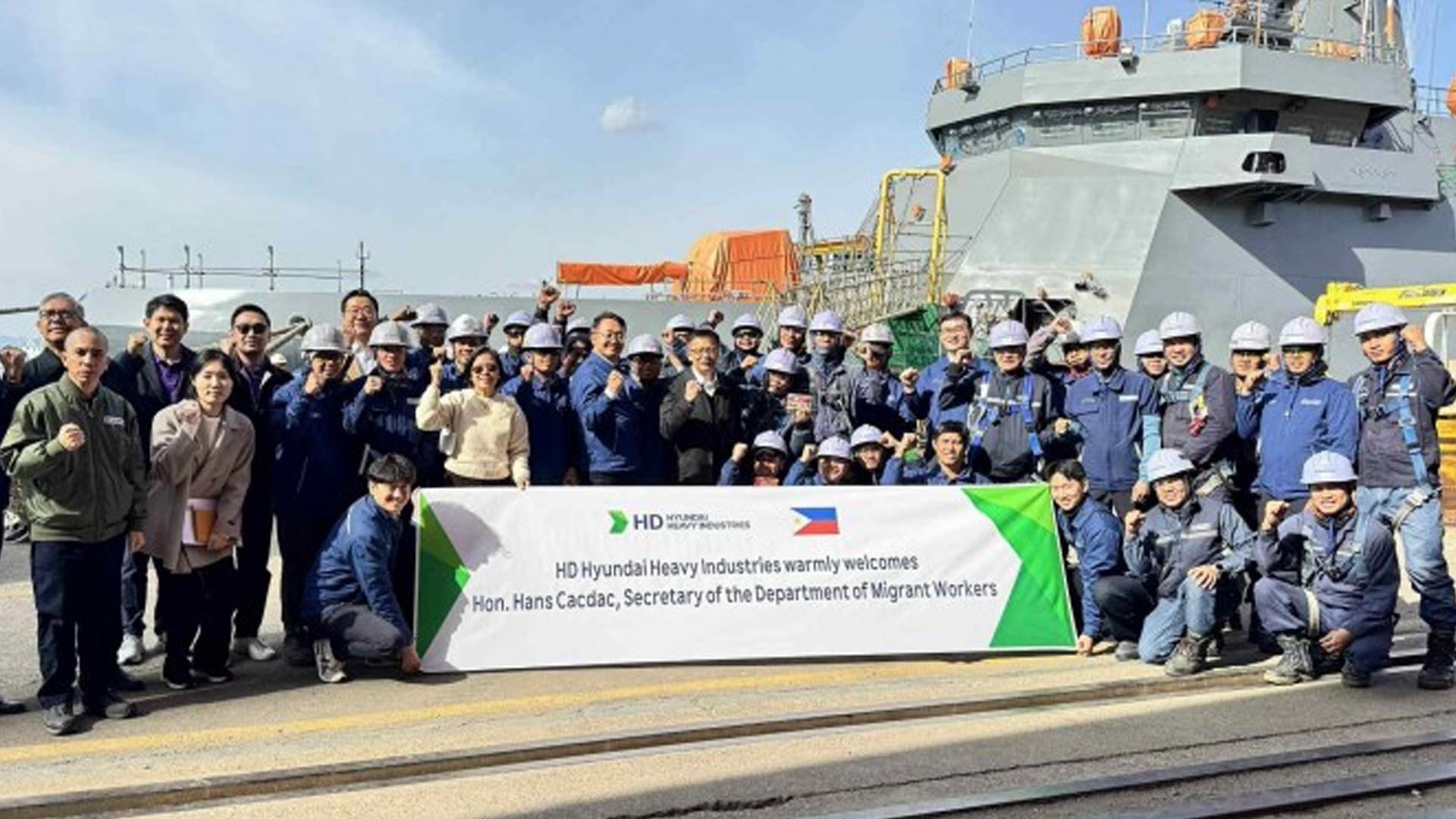







Overseas Filipino Workers (OFWs) in South Korea will get a higher pay this year after the host nation’s Minimum Wage Commission adopted a 2.9 percent wage hike starting Jan. 1.
In a news release on Friday, the Department of Migrant Workers (DMW) said the wage adjustment would benefit the 25,606 Filipino Employment Permit System (EPS) workers who earn minimum wage in the East Asian nation.
“Pursuant to Ministry of Employment and Labor (MOEL) Notice No. 2025-47, the Republic of Korea has increased its minimum hourly wage from KRW (Korean Won) 10,030 to KRW 10,320,” the agency’s Advisory No. 5 read.
The DMW said the hike is equivalent to an average monthly wage of 2,156,880 Korean won, or about PHP86,000, based on a standard monthly workload of 209 hours.
It added that the wage hike covers all industries, including Filipino workers in the manufacturing and caregiving sectors, ensuring equal treatment with local employees.
South Korea reviews its minimum wage annually based on factors such as cost of living, wage levels, labor productivity, income distribution, and industry type, aligning the needs of workers and the business sector. (PNA)