









Now in its fourth year, the Philippine Book Festival (PBF) is more than a celebration of Filipino storytelling. It is also a significant platform for authors and publishers to expand their reach, while shaping the country’s literary ecosystem.
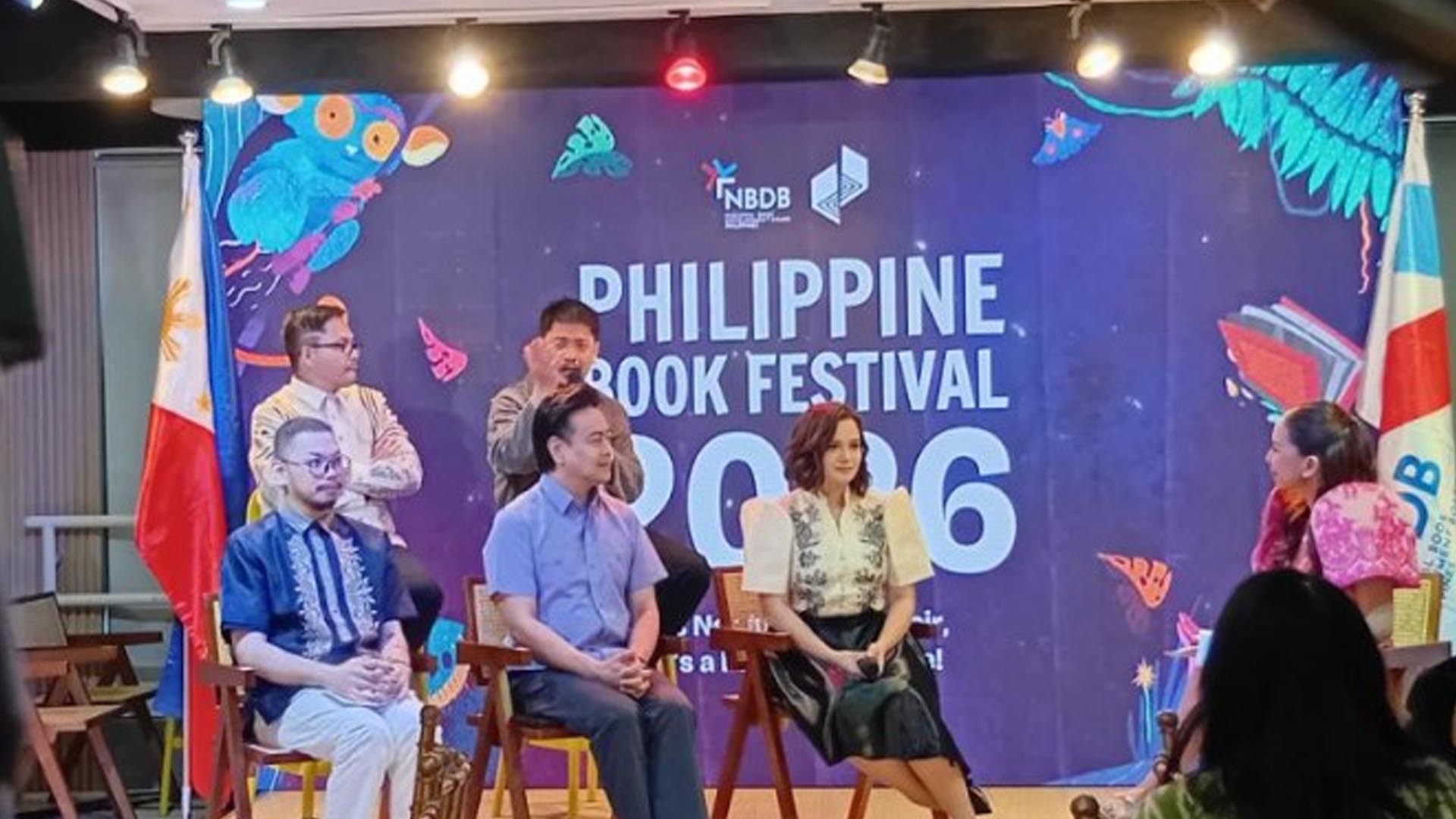
At the media launch of the PBF 2026 on Thursday, the National Book Development Board (NBDB) gave a glimpse of what to expect in the upcoming event set from March 12 to 15 at the Megatrade Hall of the SM Megamall, and how the initiative grew into a movement.
“Over four years, we have seen growth, yes, but we have also learned. We have learned that thriving means listening and adapting. That a literary ecosystem, like a rainforest, is never static—it is always reaching, always growing toward the light,” NBDB Executive Director Charisse Aquino-Tugade said in her opening message.
“The Philippine Book Festival is not just an event. It is a biorhythm for a nation of readers. It is a living, breathing demonstration of how stories can connect us,” she said, adding that the event has also become a platform where culture, commerce and education converge.
And for the NBDB, Tugade said the event is both a barometer of industry growth and a mechanism to improve access to Filipino books.
She explained that the agency’s mandate is to grow the industry, and for the last four years, the NBDB saw a surge in the number of titles and the International Standard Book Number (ISBN), which is a unique identifier for books
“The titles are growing. I think it’s about double from the last six years, so if there are more titles, that means that there are more people reading. And we’re looking at the work of the publishers, and we’ve seen their titles expanding as well,” Tugade said
She explained that NBDB doesn’t measure the reading but looks at the sales and the number of books.
“So, we’ve also seen a surge in sales. We’ve also seen a surge in registrants. So, as the NBDB, what we do is we register everyone in the publishing industry. So, there is an increase in the number of self-authored publishers, and there is also an increase in publishers,” she said.
The NBDB reported that previous PBF’s drew over 120,000 attendees and generated an estimated PHP80 million in retail sales, which is a clear indication that Filipino stories are reaching more readers than ever.
Social issues through storytelling
Several authors graced the PBF launch, highlighting pressing social realities tackled in their books
In a panel discussion, veteran broadcaster Nelson Canlas and actress Yasmien Kurdi shared their collaboration on a children’s book addressing bullying, a topic that they said is often overlooked in Philippine literature.
“Parang, come on, Filipinos, we are the bullying capital of the world. I mean, that is so sad. Okay na ako doon sa (I am okay with the) texting capital of the world eh. Pero yung (But the) bullying capital of the world, come on. And I don’t think there will be enough books about bullying na pwede natin ilimbag (that we can publish) to help create that noise, to help create that awareness na hindi na dapat nangyayari (that this should not be happening) at this day and age,” Canlas said.
The co-authors described the writing process as both “easy and hard,” noting how the subject required confronting dark realities.
“It’s okay, you can move on, you can be strong, you can be yourself. Hindi mo kailangang magbago (You don’t have to change). You can find that strength in spite of what you went through,” Kurdi noted, adding that the book also includes a poem by her daughter, reinforcing its message of resilience and self-acceptance.
A festival that connects, inspires
More than a festival, the book event is a timely intervention that aims to push the nation’s literary ecosystem.
By bringing together publishers, educators, institutional buyers, authors, and readers in one venue, where they personally meet their favorite Filipino authors, creators, and publishers, especially those aspiring to have a book with their name on it one day.
The event reduces barriers between creators and consumers, strengthens professional standards, and ensures that Filipino stories continue to thrive in classrooms, homes, nooks, and communities nationwide.
Tugade said when books move, the industry thrives. And when the industry thrives, new voices get the chance to rise.
“The Philippine Book Festival is not just an event. It is a biorhythm for a nation of readers. It is a living, breathing demonstration of how stories can connect us,” she said. (PNA)