




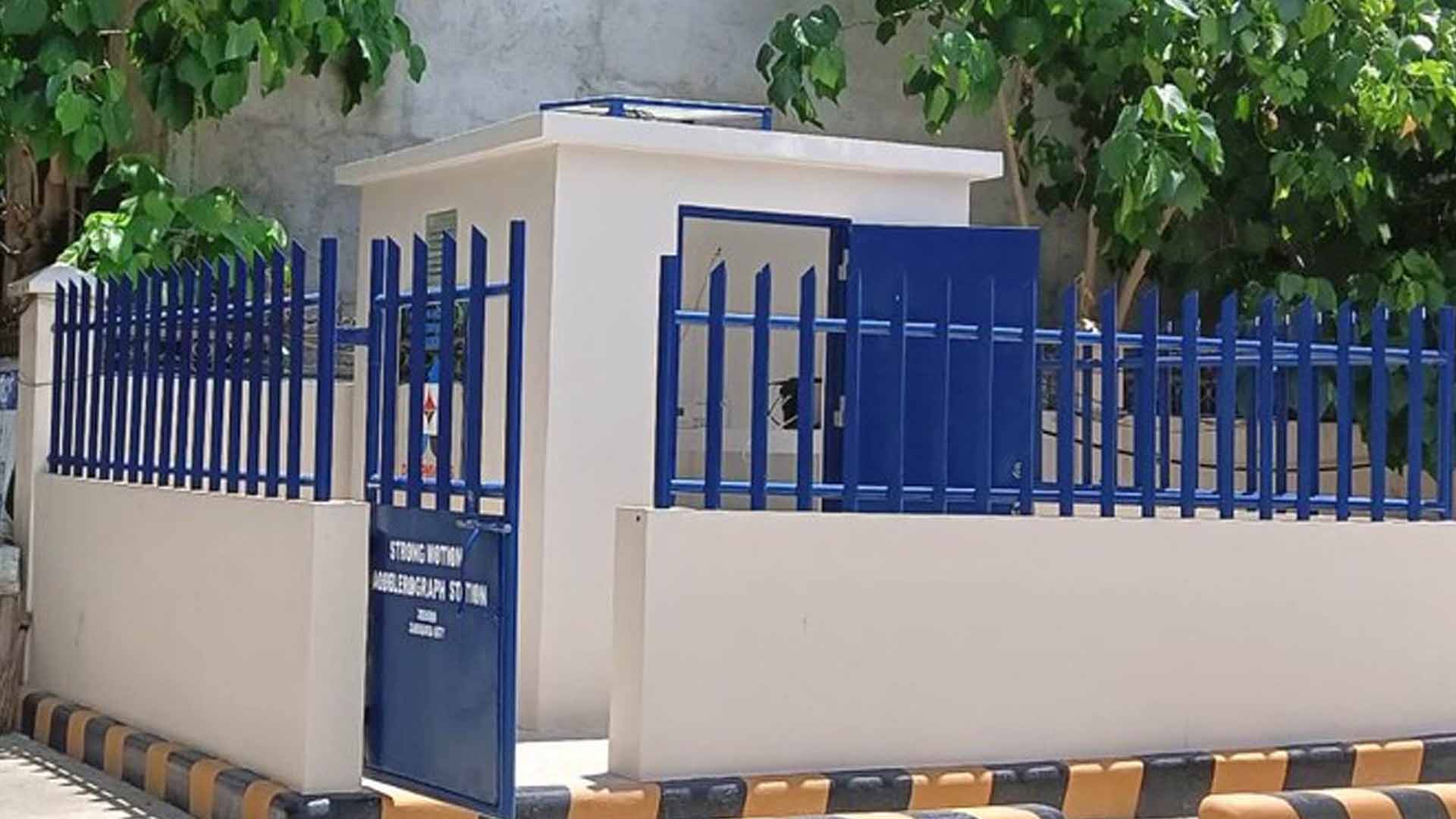







The Philippine Institute of Volcanology and Seismology (Phivolcs) has established its first strong motion station here in the Zamboanga Peninsula.
Allan Rommel Labayog, the Phivolcs-Zamboanga science research analyst, said Friday the PHP1 million facility is equipped with the latest strong motion accelerograph capable of recording large ground motion during earthquake occurrences.
“Yes, it is the first here in Region 9 (Zamboanga Peninsula),” Labayog said, adding the initiative is in partnership with the city government.
The 15-square meter facility was installed at the compound of the Zamboanga City Disaster Risk Reduction and Management Office (ZCDRRMO) in Barangay Zone 4 on Thursday.
The facility can detect strong underground motions within a 100-kilometer radius and it is solar-powered to remain operational even during power outages due to earthquakes.
Before the installation of the facility, the Phivolcs-Zamboanga rely on its seismic station equipped with short-period sensors in Barangay Sta. Maria here.
Labayog, however, noted that the seismic station data gets inconsistent in case of strong earthquakes.
“We have put up the strong motion station to be able to get the precise data in case of earthquakes,” Labayog said.
Dr. Rommel Grutas, Phivolcs supervising science research specialist, said the station can collect data that can be used to provide critical information about an earthquake event and develop an early warning system, among others.
In addition, he said the station can also identify soil types and compositions and help the City Engineer’s Office in designing earthquake-resistant buildings and infrastructure based on ground response to strong motions as collected by the accelerograph.
Currently, Phivolcs-Zamboanga has three natural calamity-detecting facilities in this city with the installation of the strong motion station at the ZCDRRMO compound.
The other two facilities are the seismic station in Barangay Sta. Maria and the tsunami-detecting sensors installed at the city port. (PNA)