











The government has established some 3,000 solar-powered irrigation systems nationwide since 2022, President Ferdinand R. Marcos Jr. said Monday, as the government expands water access for farmers and prepares for the effects of a projected “very strong” El Niño.
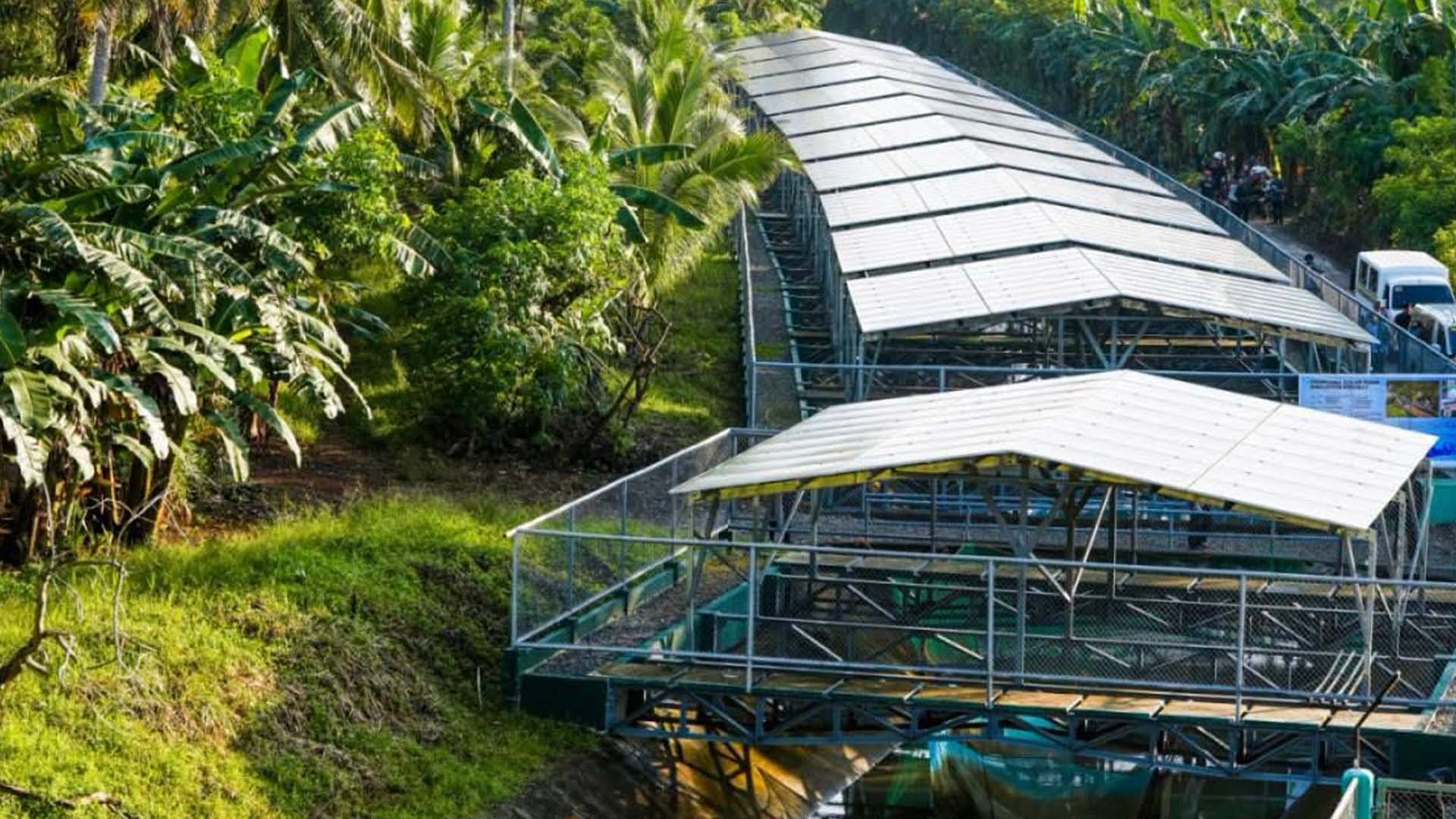
Speaking at the inauguration of the Pamplona Solar Pump Irrigation Project (SPIP) in Barangay Gattu, Pamplona, Cagayan, Marcos said the project can significantly reduce operating expenses by cutting dependence on diesel fuel.
Traditional irrigation systems cost around PHP300,000 to PHP400,000 monthly to operate, while solar-powered systems cost PHP50,000 to PHP100,000, Marcos said.
President Marcos said farmers could use the money saved on fuel for their families and other needs.
The Pamplona project, implemented by the National Irrigation Administration’s East Apayao-Abulog Irrigation System, is designed to irrigate 602 hectares of farmland and directly benefit 307 farmers.
It is equipped with three 50-horsepower solar-powered submersible pumps and 384 solar panels, providing an alternative energy source for pumping irrigation water.
Marcos said the project could allow farmers to increase their planting frequency because of a more dependable water supply.
“Ang coverage nito nakakapagpatubig ito ng 600 plus, nadagdagan nga ng 100 hectares ‘yung napapatubigan na kahit ‘yung ibang lugar na minsanan lang ang pag-planting, nakapag-two plantings na tayo dahil nga mayroon tayong ganitong klaseng sistema (It provides irrigation coverage for over 600 hectares, an increase of 100 hectares, allowing areas that previously only saw one planting cycle per year to now support two, thanks to this type of system),” he said.
The President said the threat of a “very strong” El Niño makes the expansion of irrigation infrastructure more urgent, noting that farmers in Northern Luzon were already feeling the effects of the weather phenomenon.
Marcos directed agencies to accelerate the construction of solar-powered irrigation systems and other water infrastructure to help farmers adjust to increasingly unpredictable weather patterns.
The government is also pursuing water-storage and distribution projects, while some facilities are being designed to support fish production alongside irrigation.
Marcos said the government would continue developing irrigation systems and other measures to protect farmers’ livelihoods as dry conditions intensify. (PNA)