




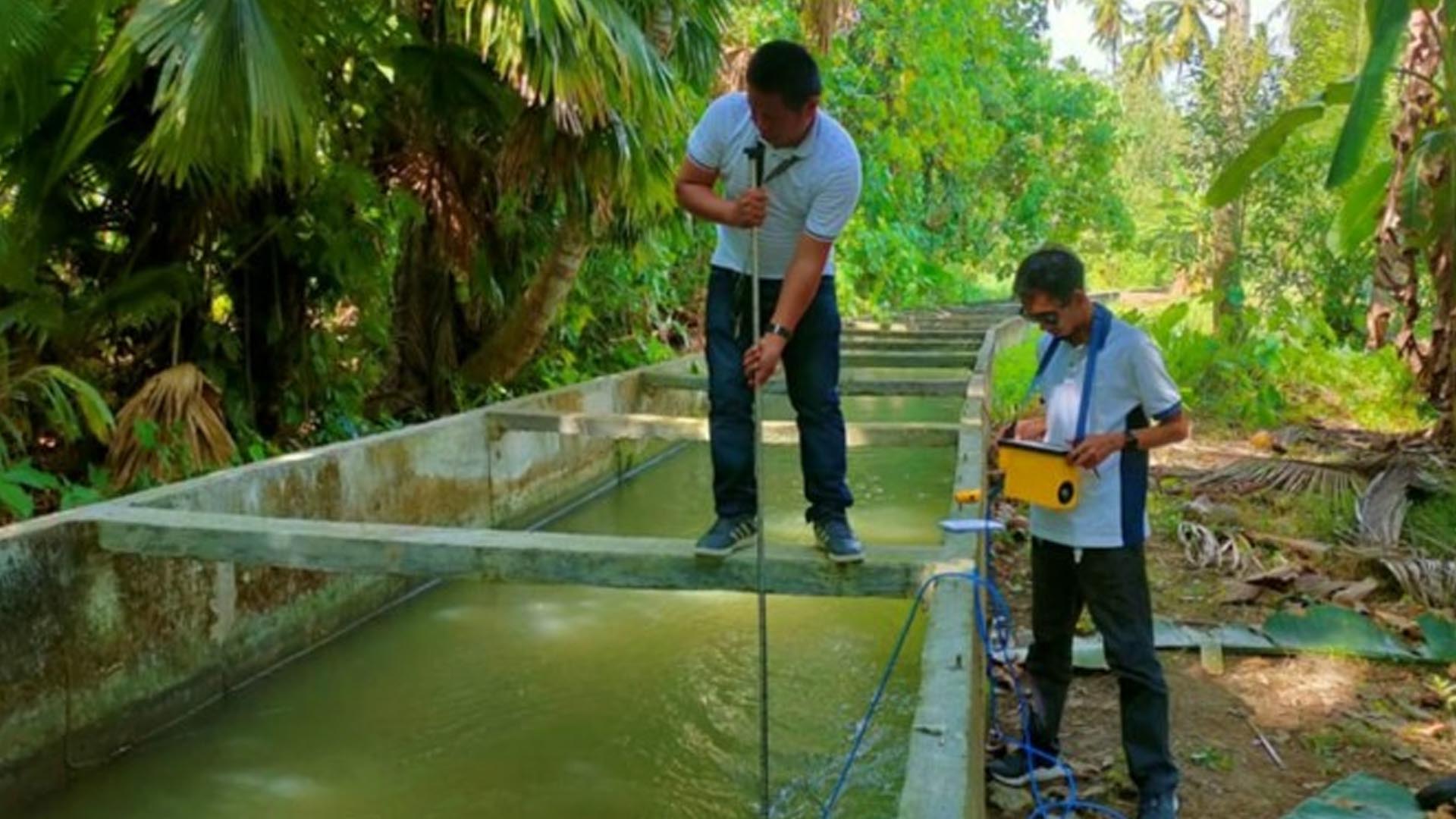







Despite recent dry conditions impacting parts of the province, the National Irrigation Administration (NIA) – Davao del Sur Irrigation Management Office (IMO) reported Tuesday that rice crops in its service areas have withstood the dry spell and are still on track for harvest.
In an interview, NIA-IMO Manager Dexter Tinapay said the agency continues to implement proactive and coordinated water management strategies to sustain rice production and ensure irrigation services across Davao del Sur.
Last month, the Department of Agriculture (DA) 11 (Davao) – Disaster Risk Reduction and Management Unit (DRRM) reported that moisture stress had damaged about PHP90.5 million worth of crops in the region.
Validated assessments showed that 2,598 farmers experienced losses in rice, corn, high-value crops, and livestock across 2,842.85 hectares, resulting in an estimated loss of 3,220 metric tons of production.
To address the issue, Tinapay said that the office intensified water management efforts, including rotating water distribution, daily discharge monitoring, and close coordination with irrigators’ associations.
“Farmers were also encouraged to adopt alternate wetting and drying techniques to maximize available supply,” he added.
He further noted that despite the dry spell, standing crops within their jurisdiction remain productive and on track for harvest.
To support critical areas, a new solar-powered irrigation facility was installed in late January to boost water delivery in parts of the Padada River Irrigation System (RIS), especially in downstream communities in Barangay Sinayawan, Hagonoy town.
“This initiative underscores NIA’s commitment to supporting farmers amid the ongoing challenges posed by climate change,” Tinapay said.
In an interview via NIA-11, Darwin Bose, a farmer from Hagonoy, expressed gratitude for the solar-powered irrigation project, noting that his farm – downstream of the Padada RIS – was among those severely affected by the dry spell.
“My fellow farmers and I have experienced how it made a difference. Our fields had started to dry up and crack, but through NIA’s assistance, they were restored,” he said. (PNA)