




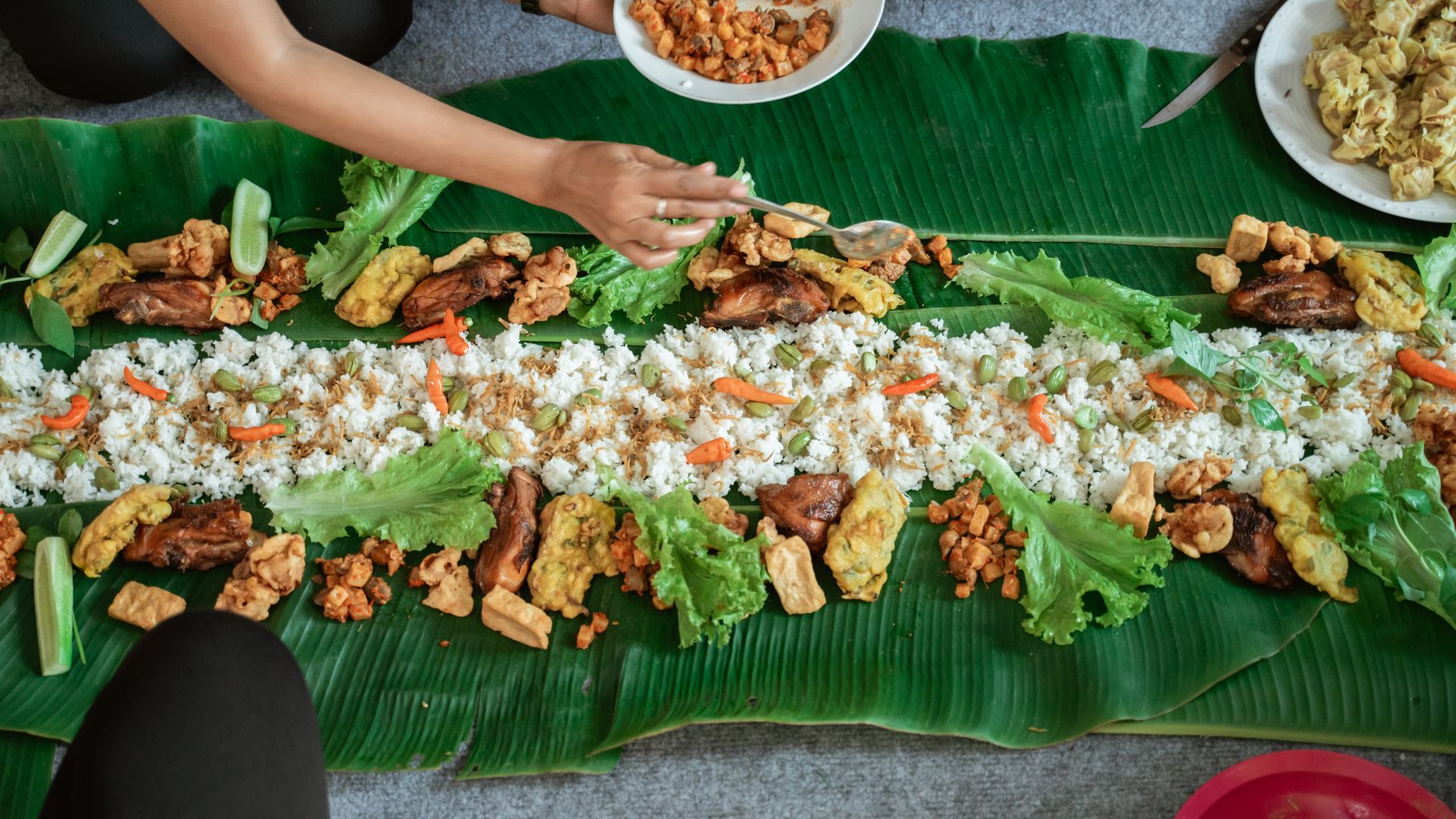







You haven’t really experienced the Philippines. Until you’ve eaten with just your bare hands. Eating with your hands, or kamayan, is one of the traditional ways every Filipino enjoys their meals. It’s a tradition passed down from generation to generation, a practice that still lives on today, especially in rural areas and among indigenous communities. While many Filipinos today use utensils, the act of eating with hands still holds a special place in the culture. For some, it’s more than just a way to eat— it’s a way to connect to people
Kamayan is a tradition that many Filipinos grew up with—and lately, more and more tourists are falling in love with it too. For visitors, it’s not just about trying or tasting local foods but about experiencing Filipino culture in the most hands-on way possible—literally.
There’s something special about sitting at a table full of food laid out on banana leaves, surrounded by people, all eating without utensils. It feels raw, real, and welcoming. Tourists often say that kamayan meals feel more relaxed and joyful compared to traditional dining. There’s no need to worry about fancy table manners or which fork to use—just good food, good company, and good vibes. One reason tourists love it is because it’s interactive. You’re not just there eating or just talking; you’re part of the moment. You will be surprised that the whole dining area is just full of happiness and laughter. Also, you’ll often see this whether it’s a family-style boodle fight or a simple home-cooked meal; it makes them feel included, like they’re not just outsiders watching culture happen, but they’re actually part of it no matter the age or status.
If you’re new to Kamayan, the steps are so simple: just use your dominant hand to scoop some rice and viand then mix it together. Gently squeeze it into a small mound, then use your thumb to push the food into your mouth. It may feel awkward at first, but surely it quickly becomes your second nature. Of course, washing your hands before and after the meal is a must.
At the end of the day, tourists may come for the food, but they stay for the feeling of it— it’s about sharing the moment. Whether you’re eating with family, friends, or even strangers, there’s something about eating with your hands that brings people closer. It’s a reminder that meals are meant to be enjoyed together, with good food and even better company.